

BLOG
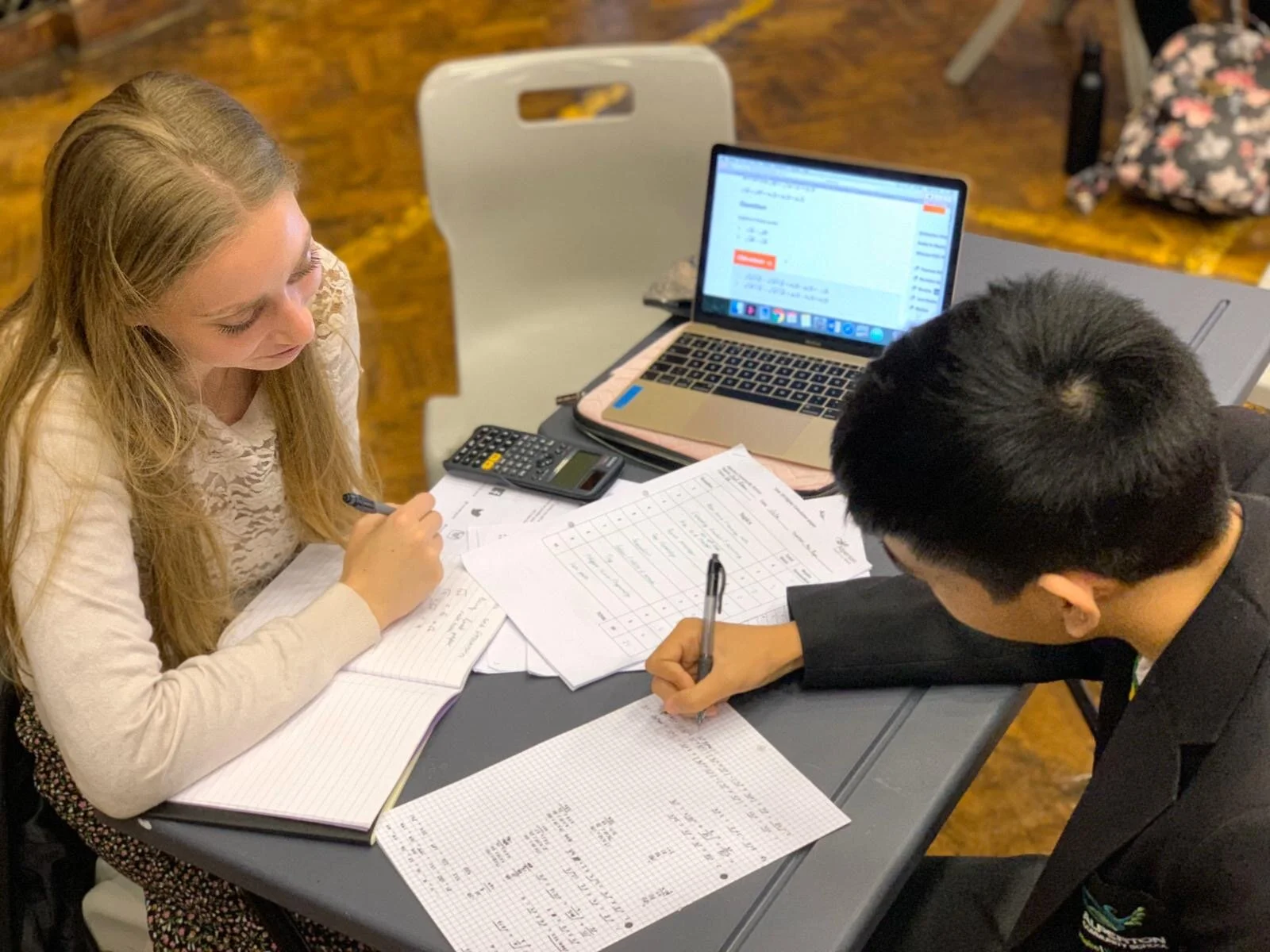
How Can I Manage my Learning at Home?
How will I revise for my exams? How can I make sure I remember everything? How can I find something that works for me? Are there any English videos on Youtube for Macbeth?
These might be questions you are asking yourself at the moment. With the news of schools closing because of coronavirus, some of you may be nervous or scared about how to manage your learning at home.
Managing Your Day
We have all had times when staying at home when we woke up at 12pm, watched some Youtube videos until 3pm and then maybe did some studying before going back on Youtube to watch more videos.
Part of making sure you manage your learning at home is keeping to a routine. Getting up at the same time every day will help you to sleep regularly an ensure you are still keeping on top of your own revision schedule.
Another factor is also making sure that you are taking regular breaks, getting out of your pyjamas into different clothes and finishing in the afternoon. At school, breaks and lunchtimes and even transition times are there to help you take a pause between activities. When studying and revising, make sure you are taking time between tasks, whether it by by getting a snack, watching a fun Youtube video or just standing up to stretch your legs.
Looking After Your Wellbeing
Studying can be fun but also stressful particularly when preparing for exams especially when you have to manage it alone. That’s why it is so important to take care of yourself - this is what we mean by wellbeing. Ways to do this is: every 40 mins take a 5 minute break, ensure you take an hour for lunch, talk to people at home or if you can chat to your friends.
Online resources
As you probably already know, the internet is filled with various types of websites, apps and videos that you can use so that when you are in charge of your own learning at home, you can still make progress, still get the grade that you want and still keep aiming high. Below are some examples of resources available to you online and for FREE. Some may need you to create an account, while some you may have a login already so it’s worth checking if you do.
We will be updating this list as we go along but we would love to hear from you should there be any resources you would like going forward.
—
Name: Seneca
Website: https://www.senecalearning.com
Great For: Making sure you are able to remember all the information you have learnt
Subject: All
Name: CorbettMaths
Website: https://corbettmaths.com (Mobile friendly)
Great For: Worksheets on different areas and topic - Past papers and worksheets also have answers!
Subject: Maths
Name: MathsGenie
Website: https://www.mathsgenie.co.uk (Mobile friendly)
Great For: Past exam style questions
Subject: Maths
Name: MathsBot
Website: https://mathsbot.com (Mobile friendly)
Great For: Skills practice, a variety of questions to practice for exams - also gives you the answers
Subject: Maths
Name: ExamSolutions
Website: https://www.youtube.com/user/ExamSolutions (Mobile friendly)
Great For: Going over exam style questions
Subject: Maths
Name: BBC Bitesize
Website: https://www.bbc.co.uk/bitesize (Mobile friendly)
Great For: Learning individual topics and bits of information
Subject: All
Name: BBC Teach
Website: https://www.bbc.co.uk/teach/secondary/zkqp47h (Mobile friendly)
Great For: Teachers use this mainly but it doesn’t mean you can’t! Many videos for you to teach yourself
Subject: All
Name: Quizlet
Website: https://quizlet.com/en-gb
Great For: Quick speedy tasks to test one’s knowledge
Subject: All
Name: Sparknotes
Website: https://www.sparknotes.com (Mobile friendly)
Great For: Study guides for all texts
Subject: English
Name: Video sparknotes
Website: https://www.youtube.com/user/VideoSparkNotes (Mobile friendly)
Great For: If you would like to watch some videos on the text you are reading
Subject: English
Name: Kahoot
Website: https://kahoot.com (Mobile friendly)
Great For: Quick quizzes - You can use this to revise with your friends when you are at home!
Subject: All
Name: PhotoMath
Website: https://www.photomath.net (Mobile friendly)
Great For: Solving equations when feeling stuck
Subject: Maths
We hope these are all useful!
The CoachBright Team

FAQs for CoachBright and COVID-19
1) What is coronavirus?
This is a new illness that affects a person’s lungs, airways, and primarily causes a cough and high fever. Please have a read through this nhs page if you would like to gain more clarity on the symptoms or context.
2) What if one of our pupils has coronavirus?
In this case, we are not in the best position to answer that question. The best thing to do would be to check with your school’s policies and updates.
3) What is CoachBright's current policy on COVID-19 (coronavirus)?
Our policy is in line with the latest governmental updates as well as our own to ensure the safeguarding of all the pupils we work with, our volunteers and our community of partners. We will be sending regular updates with regards to this situation and ensure that everyone understands the next steps.
4) Are there going to be any more CoachBright sessions?
At the moment all of our sessions and graduation events have been postponed until after the Easter holidays. This is in line with the latest university and school closures and recent changes the government has announced as of 20/03/2020.
5) What should I do if I am a Coach and I am ill?
We advise that if you are feeling unwell and are showing any of these symptoms, please self-isolate for 14 days. If you are living in a flat with other people, they will have to self-isolate as well. For more guidance, we encourage you to contact your university directly.
6) Why have the graduations been postponed?
Due to many universities deciding to close doors to face-to-face coaching and encouraging every student to stay at home, it is safest for us to postpone our events for now and wait for further updates before we decide to run our events.
7) How long will graduations be postponed for?
At the moment, it is very hard to tell. We are monitoring the government's decisions very closely, and we are committed to celebrate the successes of the pupils when it is safe to do so. At the moment graduations have been postponed until after Easter, but this could change in the next few days and weeks.
8) What are the next steps from today?
We will follow all new governmental updates closely and continue to communicate with schools and volunteers on a regular basis to support each other's safety and understanding amidst this time of uncertainty.
9) Can I still continue Coaching?
YES! We would love to receive your support in the coming days and weeks, as we will continue to support our pupils virtually through online learning. Please fill in our quick form if you are interested and we will get in touch to let you know the next steps.
10) I will be travelling to another coronavirus affected area in the coming weeks. When should I come back to the UK?
We advise that you follow the guidelines set out on this page of the government's website. Every country will have its own policies and the situation may look very different when on the ground. Should you find yourself in a situation where you are unable to make it back for future CoachBright sessions or events, please inform your Head of Region as soon as possible.
The CoachBright Team
Guidance for Coaches: COVID-19
Coronavirus Support for Our Coaches: Remembering What is Important
Coronavirus is at the front of everyone’s mind at the moment. Discussion of the virus currently dominates our news, conversations and thoughts, with an overload of information available at every turn. Amongst this climate of distress, it’s important to focus on what is important.
At CoachBright, our wonderful community of social justice warriors are of paramount importance to us. This is what has been at the heart of our decision to postpone the remainder of our programmes and events.
Our amazing coaches are in a unique position of largely living in temporary locations close to their universities, often away from their loved ones and in sometimes unfamiliar surroundings. We have had so many lovely messages from our coaches updating us with their travel plans and sharing their appreciation for being part of our programmes. This has brought so much joy to us across our regions and this is a huge testament for what kind people you all are. Thank you all for joining us with such enthusiasm, compassion and diligence in fighting for social mobility and social justice throughout the UK.
We are indeed living in unprecedented times and we would like you all to remember the following three aspects to focus on what is important for you.
Mental Health and Wellbeing
Often the most neglected area amongst global panic, it is essential to remember to look after your mental health and wellbeing in however works best for you. We recommend:
- Getting fresh air and appreciating natural beauty wherever possible. Could you take 5 deep breaths at your front door/an open window in the morning? Could you take time to appreciate the night’s sky?
- Increasing digital connection with those closest to you through regular online check-ins and sharing positive content. Could you send a song of the day to your loved ones?
- Limit exposure to new updates as much as possible. Could you implement a news-free hour a day? Could you follow @thehappynewspaper on Instagram for positive updates?
Personal Health and Safety
- Please follow Coronavirus advice from the NHS online
- Make sure you are aware of how to stay safe at home
- Keep updated with latest Government guidance
Maintaining the Safety of Others and your Community
- Always remember to be kind and think of the effects on those less fortunate.
- Support those in your local vicinity wherever possible. Could you text your neighbour to check how they are doing?
- Think about acting in a way that best supports everyone you live with, especially those who are more vulnerable.
What’s next for our programmes you may ask? All graduation events will be rearranged for a later date that will be communicated to you all at first instance.
JOIN THE CAMPAIGNS
In light of current events, we’re also launching a couple of campaigns and would love your help in rallying for the cause!
Virtual coaching
We’re currently looking into the best way for us all to be able to continue to support our pupils no matter where we are. This will be through virtual/online coaching! You can sign up to join the coach community and provide valuable help at bit.ly/virtualcoachbright. We’d also love your friends, family and anyone else that can help out to sign up and help us make this a (virtual) reality.
Campaign against holiday hunger
We’ll be writing another blog post soon about our campaign to help reduce the holiday hunger that will undoubtedly be faced by our free school meals/pupil premium pupils in the coming weeks. You can find out more by keeping up to date with us on social media, through this blog and by checking your whatsapp groups/emails.
The CoachBright Team

Guidance for School Partners COVID-19
To our school partners,
We understand that we're negotiating difficult times at the moment amidst the COVID-19 (coronavirus) situation. As this continues to develop, please be assured that we remain committed to safeguarding the health and security of pupils, our volunteers and everyone else in partnership with CoachBright. We are keeping up to date with policy changes and are adhering to the latest government guidelines and university policies across the UK.
We want to reassure our partner schools that we will shed as much clarity as possible as soon as there are updates. This blog will help us to send out these updates in real time.
For the time being, CoachBright has made the difficult decision to postpone all current and future sessions and events in London and Plymouth until after the Easter holidays. Sessions in Birmingham and Exeter will be reviewed on a case-by-case basis and in line with school visitors guidance. This is based on yesterday's briefing from the PM on 16/03/2019 alongside many universities closing doors to face-to-face teaching.
We understand the big impact that this situation is having on schools and communities at the moment, but most importantly on the pupils. For all of our pupils, but particularly many of the year 11s/13s that we work with, times are difficult and uncertain. At CoachBright we want to try to play a part in making some of this a little easier.
In the coming days and weeks, we will be emailing our partner schools with resources, websites and links that might be useful for moving to online learning. We'll also be starting a campaign to tackle the 'holiday-hunger' aspects of isolation that will no doubt have an impact on many of our pupils, particularly those who rely on your school for meals during the day. You can expect emails from Jen, Trish and the rest of the team with news on this.
Of course at this time, we want to support our partner schools as much as possible. If there is anything you need from us, please do not hesitate to contact us through your head of region (details below).
Thanks,
The CoachBright Team
Jennifer Love, jennifer@coachbright.org, 07384 113269 - West Midlands and South West
Patricia Mbangui, patricia@coachbright.org, 07511 982773 - London and South East

HIRING - Plymouth Programme Officer (Part time)
We are hiring! Care about social mobility? Drive our programmes forward in Plymouth and surrounding areas.
Are you our next Plymouth Programme Officer (Part time 4 days a week)?
As an award-winning, fast-growing social enterprise focussed on social mobility our mission is to support young people from disadvantaged communities to identify and fulfil their potential.
Working in partnership with schools, we deliver academic coaching programmes that improve a pupil’s grades, confidence and independence so they can win places at top universities and high level apprenticeships.
Having turned five years old in February 2019, we are at an exciting stage of growth and have ambitious plans to scale our impact and reach. Currently working across London, West Midlands, South West and recently the Isle of Wight, for the first time, we are looking to thoughtfully scale our academic programmes into hard to reach deprivation areas. By 2022/23, we want to support 10% of secondary schools nationally.
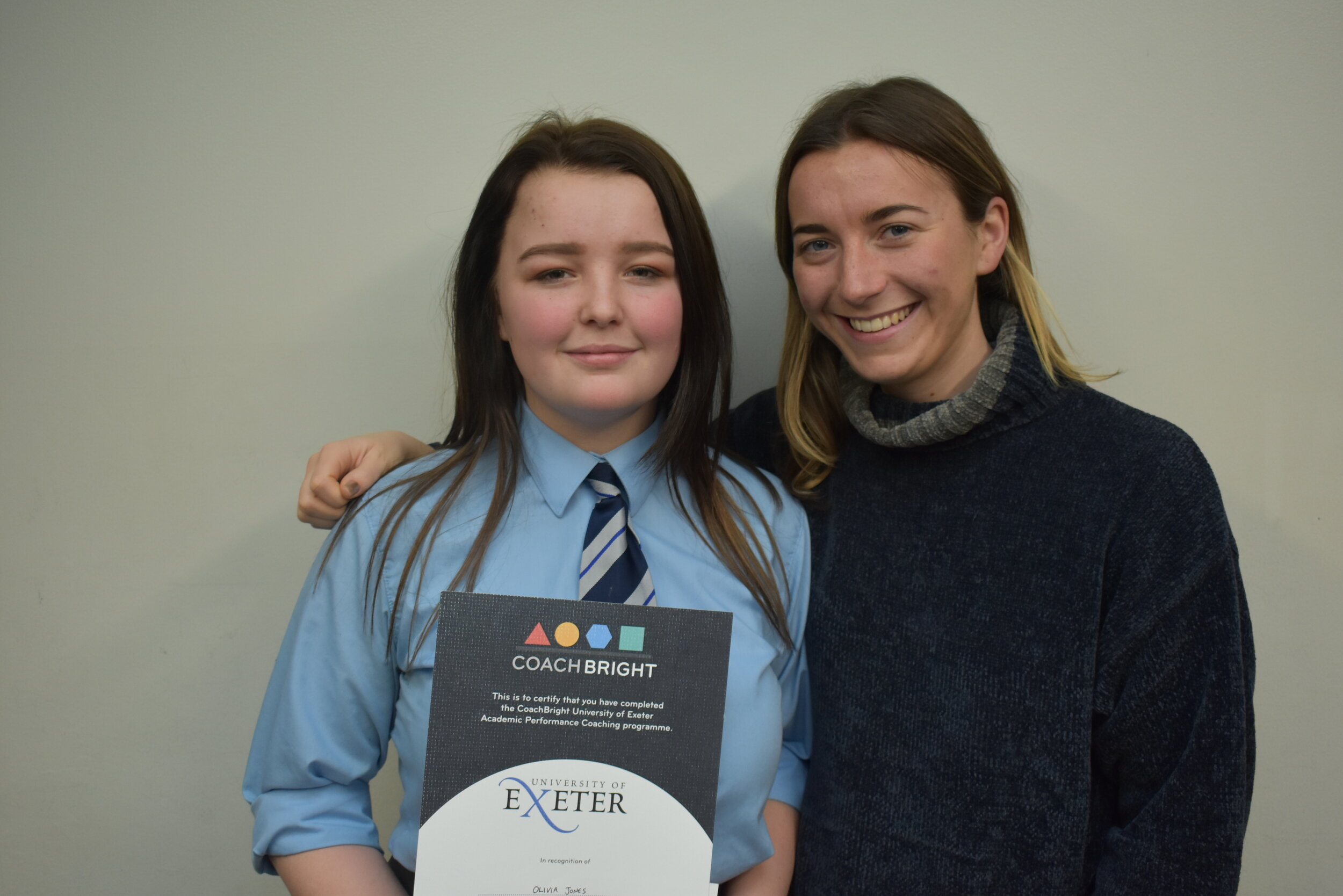
Across the South West, we support pupils across Plymouth, Exeter and Bristol. Since 2014, we have developed emerging partnerships and relationships across the region with the University of Plymouth and Exeter. We are now looking for a new team member to help realise the full potential of Plymouth.
Working collaboratively with the University of Plymouth and partner schools we need an outgoing, passionate self-starter to drive our work across our core programmes in and outside of Plymouth.
For the full job description and how to apply please click here.
The deadline for applications is Friday 13th December 2019. For full details of the process, please see link above.
Any questions or if you would like a confidential phone call to discuss the role, please email robin@coachbright.org.
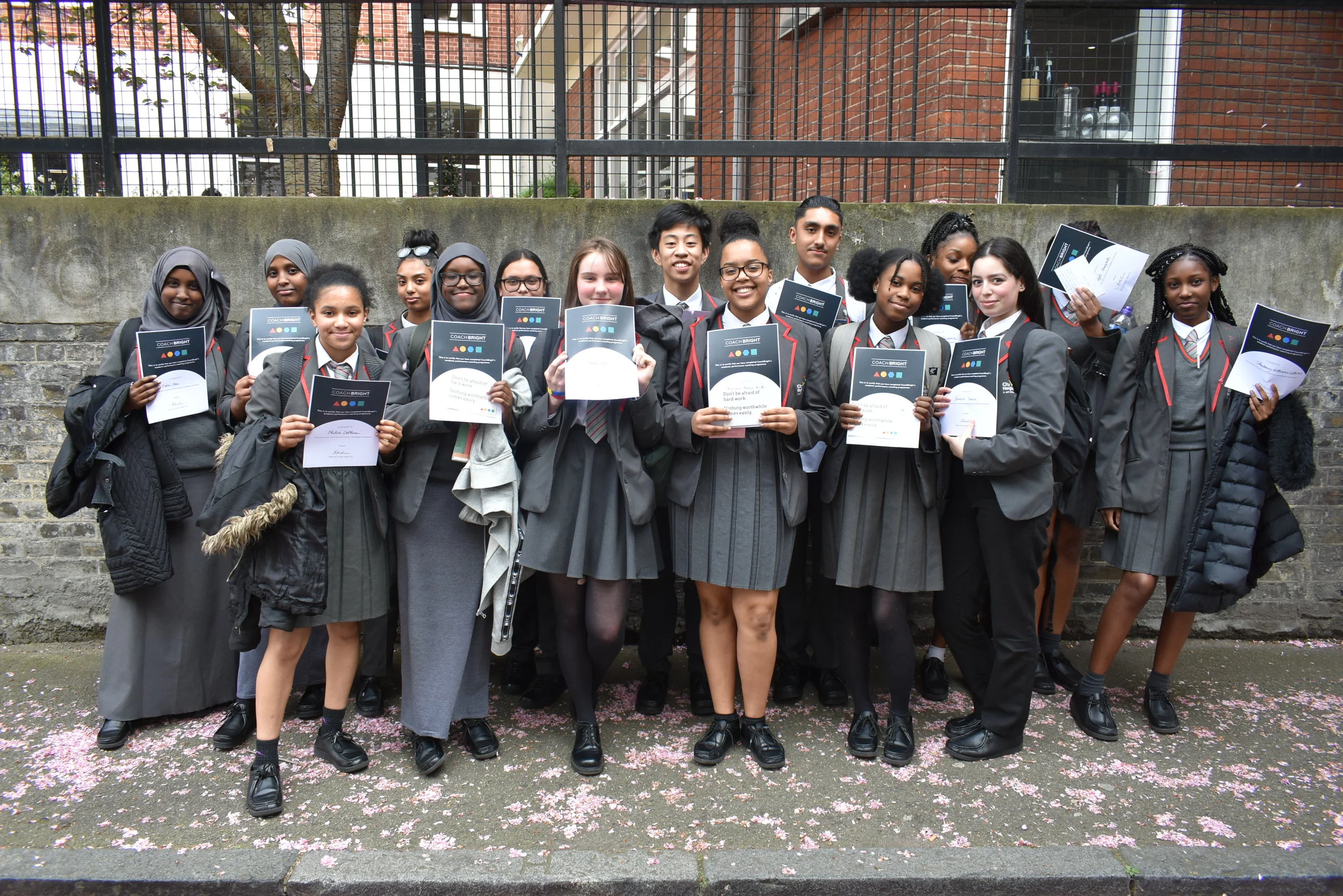

Education vs the Postcode Lottery
We’re not talking about learning to win cash prizes from the postcode lottery you see advertised on TV. This is about the education of future generations.
Daniel Griffin gives us the low-down on how the education system can combat inequality arising from the ‘postcode lottery’.
We’re not talking about learning to win cash prizes from the postcode lottery you see advertised on TV. This is about the education of future generations.
So, what is the postcode lottery? Well, as with the real lottery, the outcome is determined by chance. We have no influence over critical factors - like our postcode - that can dictate our success. It is proven that those of us born in certain situations and locations are disadvantaged from the get-go.
The difference in attainment between wealthy and poor students has been reported as up to 40% and the figure is growing (i). However, poor students that make it to further education perform well. Studies have shown that those entering university from low-performing schools tend to have lower qualifications on entry, but there is no significant difference in their performance at university when compared to wealthier students (ii).
This begs the question, where do the problems lie and why are young people from disadvantaged backgrounds less likely to succeed overall?
The problem in education and beyond
Currently, our schools are full of incredible individuals trying their best to improve the prospects of young people. However, they also have their own families and problems to deal with. We cannot let this issue rest on their shoulders alone.
It is no secret that state schools are overcrowded, underfunded and struggling to keep young people engaged. In some areas, student to staff ratios are upwards of 30:1 (iii). This leads to disengagement, apathy and lesson disruption. Teachers are spread so thin that they cannot keep up with the learning requirements for each individual student.
Those of us born into affluent families, and/or wealthy areas are immediately advantaged. There is a greater chance of these families being high-earners, able to afford private education and tutoring for their children. This leaves a sizeable gap between those growing up in impoverished areas and those in more affluent areas.
Many families on the breadline are fragmented and unable to afford basic needs for their children. This bleeds into the lives and expectations that young people have for themselves, shatters their confidence and self-respect. In turn, these factors form an environment where it is difficult for many young people to achieve their academic and career goals.
Confidence
Young people are versatile, capable of developing their skills faster than adults. Many have faced and overcome the built-in economic and societal barriers that would hold them back. So why not all?
The capacity of children to learn and grow is incredible. However, self-doubt is often heavily instilled in their minds. Be it from comparing themselves to their peers or experiencing condescending attitudes from adults. The resultant lack of confidence can have drastic negative effects on their motivation and work ethic.
Young people need an environment that allows them to understand their strengths and weaknesses. They need adults in their lives that can bolster their confidence. It may only take a single person to make that difference.
Role models
The importance of role models for children is often described as a key factor that helps to form their goals and aspirations. Disrupted families are common in low-income households, which can frequently impact the availability of support and guidance for young people. This is by no means the fault of struggling single parents, but a symptom of the systemic problems that deny some children the grounding they need to succeed. In the absence of regular contact with a reliable role model, young people may become apathetic and unmotivated.
We can change this. As Brexit and the general election looms, there is an opportunity to renew focus on government intervention. Direct funding to schools could take the form of personal development schemes for students. They may also help to fund organisations like CoachBright to improve social mobility projects nationwide. This gives students a chance, for potentially the first time in their life, to benefit from one-to-one coaching and tutoring. This improves confidence, helping to cement both short and long-term goals. Overall, role models can be personal champions for young people, which is an essential component for their education and development.
Establishing goals
Think back to when you were 14, 16 and 18 years old. What were your career goals? Now think about where you are now in your life. How much have your aspirations changed throughout your development? The answer is usually a lot. The skill to set appropriate goals and attain them is a crucial factor that decides where we end up in our adult lives.
But young people from disadvantaged backgrounds often experience a day-to-day struggle that prevents them from honing this ability. Many grow up too fast, whether due to caring responsibilities for siblings or disabled parents, or working part-time to supplement their household income. This skews their perspective away from thinking about their destination in life and towards the present challenges. Career services vary dramatically from school to school, meaning that the education system currently fails to provide many young people with adequate guidance.
However, the continued acceptance and implementation of programmes that focus on goal setting for pupils promises to kick-start a new trend in education. If we can provide more tailored support for individuals through mentorship and coaching, we can foster environments where young people can think and talk about their future. This is a vital step in the right direction that offers us a chance to level the playing field and open doors for those disadvantaged by their background.
So, let’s keep this social mobility train going and lay the foundations for tracks that will lead young people to happier, more fulfilled lives.
Author: Daniel Griffin, West Walsall Programme Coach.


HIRING - Programme Officer (Part-Time)
We are hiring! Care about social mobility? Lead 3 of our peer to peer programmes supporting young people from disadvantaged backgrounds achieve their best!
Are you our next London Programme Officer?
As an award-winning, fast-growing social enterprise focussed on social mobility our mission is to support young people from disadvantaged communities to identify and fulfil their potential.
Working in partnership with schools, we deliver academic coaching programmes that improve a pupil’s grades, confidence and independence so they can win places at top universities and high level apprenticeships.
Having turned five years old in February 2019, we are at an exciting stage of growth and have ambitious plans to scale our impact and reach. Currently working across London, West Midlands, South West and recently the Isle of Wight, for the first time, we are looking to thoughtfully scale our academic programmes into hard to reach deprivation areas. Over the next 3 years, we are aiming to support over 10,000 young people.

We need an outgoing, passionate self-starter to support the London team in coordinating three of our peer to peer programmes.
As a vital member of the organisation, you will be responsible for partnership development, profile raising and managing three of our programmes from volunteer recruitment all the way through to evaluation.
If you are passionate about social mobility and want to contribute to our mission, we definitely want to hear from you!
For the full job description and how to apply please click here.
The deadline for applications is Friday 30th August 2019. For full details of the process, please see link above.
Any questions or if you would like a confidential phone call to discuss the role, please email carole@coachbright.org.

HIRING - Be Our Head of South West
We are hiring! Care about social mobility? Lead our South West programmes supporting young people from disadvantaged backgrounds achieve their best!
Are you our next Head of South West?
As an award-winning, fast-growing social enterprise focussed on social mobility our mission is to support young people from disadvantaged communities to identify and fulfil their potential.
Working in partnership with schools, we deliver academic coaching programmes that improve a pupil’s grades, confidence and independence so they can win places at top universities and high level apprenticeships.
Having turned five years old in February 2019, we are at an exciting stage of growth and have ambitious plans to scale our impact and reach. Currently working across London, West Midlands, South West and recently the Isle of Wight, for the first time, we are looking to thoughtfully scale our academic programmes into hard to reach deprivation areas. Over the next 3 years, we are aiming to support over 10,000 young people.

Head of South West Role
We need an outgoing self-starter to drive our work in the South West forward, making it a commercially sustainable hub that delivers real social impact.
As the public face of the organisation, you will be responsible for partnership development, profile raising and managing our programmes from volunteer recruitment all the way through to evaluation.
This is an in at the deep end role and s/he will flourish in a small dynamic team with real influence in decision making.
For the full job description and how to apply please click here.
The deadline for applications is Sunday 28th July. For full details of the process, please see link above.
Any questions or if you would like a confidential phone call to discuss the role, please email robin@coachbright.org.

Gambols and Tip-Tops: Do Regional Accents Affect the Way We Are Perceived?
“What I did not realise was that accents, the words you use and the colloquialisms you adopt can go a long way in creating a “class ceiling”; with the most elite companies favouring people without regional accents and dialects.”
I, like many of the people who lived with friends whilst at university, spent a lot of time arguing over the correct way to say “grass” “bath” and “castle”. The ‘right’ name for a bread roll (a cob? a balm? a bap? a teacake?) was an ongoing debate and everyone spent the first week of freshers trying to mimic each other’s regional twangs.
What I did not realise was that accents, the words you use and the colloquialisms you adopt can go a long way in creating a “class ceiling”; with the most elite companies favouring people without regional accents and dialects. In fact, a 2015 study found that people who stayed completely silent were viewed as more intelligent than those with a Birmingham accent. Another study even linked a person’s accent to their likelihood of committing crime.
But it is not just about the accent you use to make your point, it is the way in which you do that.
Sociologist and linguist Basil Bernstein wrote extensively about the difference between the ways that working class and middle class students use language. He called these “Elaborate (middle-class) and Restricted (working-class) Code”. In short, elaborate code pulls from an extensive repertoire of vocabulary and is able to adapt to a variety of social situations allowing the user to manipulate their linguistic resources to make their point. Restricted code uses a much less formal sentence structure and an often narrower vocabulary (especially synonyms).
So, why does this matter?
School is taught in elaborate code. Exam mark schemes require certain words and sentence structures. Whether or not your writing adheres to the ‘academic’ style at university (and even pre-uni with personal statements/applications) is dependent almost entirely on your ability to manipulate vocabulary and syntax. To receive qualifications, score highly in speaking exams and become more ‘academic’, you need to be able to master elaborate code, which for some seems unnatural and antagonistic to their communication styles at home.
Now, I pose this question: does it really matter how someone explains photosynthesis as long as they have a solid understanding? Does the way you speak about a subject denote that you know more or less about it? Is an essay written in perfect academic form more of a worthwhile read than one that is not? If I use colloquialisms, am I worse at my job?
Radical change would see schools and universities recognise the merits of all forms and expressions of knowledge. Maybe a conversation about Macbeth is just as valid as an essay?
In any case, as potential future employers and interviewees alike, what we can do for now is our best to recognise privileges and mitigate bias.
And if you cannot? well, yu’m thick ay ya.
—
Blog Post by Jennifer Love, Midlands Programme Officer

Why Inspiration is Important to Learn
“Learning is not about getting everything right or checking things off a list, it is about nurturing an attitude of perseverance and resilience.”
I have always loved literature and I leapt at the chance to continue studying it at university – it seemed like the perfect place to satisfy my voracious appetite for both fiction and new ideas. When I look back at my time at school, it is difficult to pinpoint where my love of learning originated from. However, there is one overwhelming memory: I remember all of my English teachers. Crucially, I have positive memories of all my secondary school English teachers even though they were all very different in their teaching styles and personalities. Digging a little deeper, I realise that they all had one thing in common: they all inspired me to keep learning.
It seems like it should be part of a teacher’s job to keep you learning, but my teachers went the extra mile for me by recommending books that I would never have picked up otherwise and suggesting new concepts for further independent research. My teachers motivated me to keep learning beyond the boundaries of the curriculum by having patience and recognising my potential.
I realise now that learning is often a difficult and isolated journey to commit to on your own – especially without the right support structures. I have been very fortunate in my academic experiences and I want to share that good fortune with someone else. This is what CoachBright has taught me how to do. Not only have I developed the skills to show someone how to keep learning, but I now have a greater understanding of what made my teachers so inspiring.
Learning is not about getting everything right or checking things off a list, it is about nurturing an attitude of perseverance and resilience. Learning demands patience; it is the courage to ask questions and seek out answers, even if those answers lead to more questions. Making a commitment to keep learning is made easier by inspiring role models; they show us how to keep trying, how to work our problems out and how to re-evaluate our situation when things still are not going our way. CoachBright has allowed me to reflect on my own passion for learning and it provides its coaches across the country with the skills to build this foundation for someone else, so that their journey becomes easier as they grow older.
—
Blog Post by Amirah Muhammad, Coach in London





Battle of the Bottom: An Editorial on UK versus US Social Mobility
“…yes, things are going to be quite challenging and you are fighting against the national averages but we are going to try to give you ever tool, tip and trick we know to help you achieve your goals despite all of that.”
The United Kingdom and the United States, two of the most powerful socio-political countries in the world, have been fighting for the bottom spot among 1st world social mobility statistics for decades[i]. At CoachBright, our mission is to draw attention to and eventually eliminate this disparity. At times, it may seem like a never-ending battle, but I thought that sharing my story would allow for a more hopeful view of what we try to do for disadvantaged pupils in the UK.
I was born and raised in the United States (Ohio by way of Colorado by way of California, etc.) in a lower middle-class family. My mother was a single parent of four children by the time I was thirteen; and due to her two jobs, I was an unpaid babysitter, tutor and maid until I left home. However, I was always completely sure of my goal to get a degree and become an academic, but this was a goal I did not realise until fifteen years later in the United Kingdom.
America is founded on an ethos of Manifest Destiny, can-do attitude and meritocracy. I (like most Americans) grew up hearing that working hard was how you achieved your dreams. This is reinforced even today with feel good articles commonly found on Facebook[ii]: articles and stories that reinforce the idea that even in the worst circumstances, you can achieve your dreams as long as you work hard. Unfortunately, children are actually less likely to go into further education or make more money than their parents[iii].
This is what happened to me. I worked hard, got the grades, got a few scholarships, got a lot of loans (at 9.6% interest) and worked nights my first semester at OSU to cover the rest of my tuition fees. By the following year I had taken a sabbatical because I could not afford it. A few year later, I moved to the UK with my husband, waited patiently for three years to become a permanent resident, did an Access course, and ten years after I left high school I got my BA from The University of Exeter with only a measly £25k debt to the government (a year's tuition back home).
The point of my story is in no way to say that the UK is the land of dreams where “if you work hard you can achieve it”. They are mired by the same issues as the US; however, when it comes to higher education, there are many more opportunities for those people to work hard and achieve, and CoachBright exists to allow access to those opportunities.
We are showing children that, yes, things are going to be quite challenging and you are fighting against the national averages but we are going to try to give you ever tool, tip and trick we know to help you achieve your goals despite all of that. We hope that this is the first step in affecting change at a systemic level, a way for all children to have the same chances.
—
Blog Post by Arielle Woods, Programme Officer in the South West
—
[i] https://www.pewglobal.org/2017/04/24/middle-class-fortunes-in-western-europe/
[ii] https://www.theguardian.com/us-news/2018/mar/28/which-country-has-the-worst-class-system-the-uk-or-us
We're Hiring - Be Our Head of London!
We are hiring! Care about social mobility? Lead our London programmes supporting young people from disadvantaged backgrounds achieve their best!
Are you our next Head of London?
As an award-winning, fast-growing social enterprise focussed on social mobility our mission is to support young people from disadvantaged communities to identify and fulfil their potential.
Working in partnership with schools, we deliver academic coaching programmes that improve a pupil’s grades, confidence and independence so they can win places at top universities and high level apprenticeships.
Having turned five years old in February 2019, we are at an exciting stage of growth and have ambitious plans to scale our impact and reach. Currently working across London, West Midlands, South West and recently the Isle of Wight, for the first time, we are looking to thoughtfully scale our academic programmes into hard to reach deprivation areas. Over the next 3 years, we are aiming to support over 10,000 young people.
Head of London Role
We need an outgoing self-starter to drive our work in London forward, making it a commercially sustainable hub that delivers real social impact.
As the public face of the organisation, you will be responsible for partnership development, profile raising and managing our programmes from volunteer recruitment all the way through to evaluation, alongside working day to day with our London Programme Officer.
This is an in at the deep end role and s/he will flourish in a small dynamic team with real influence in decision making.
For the full job description and how to apply please click here.
Any questions or if you would like a confidential phone call to discuss the role, please email robin@coachbright.org.
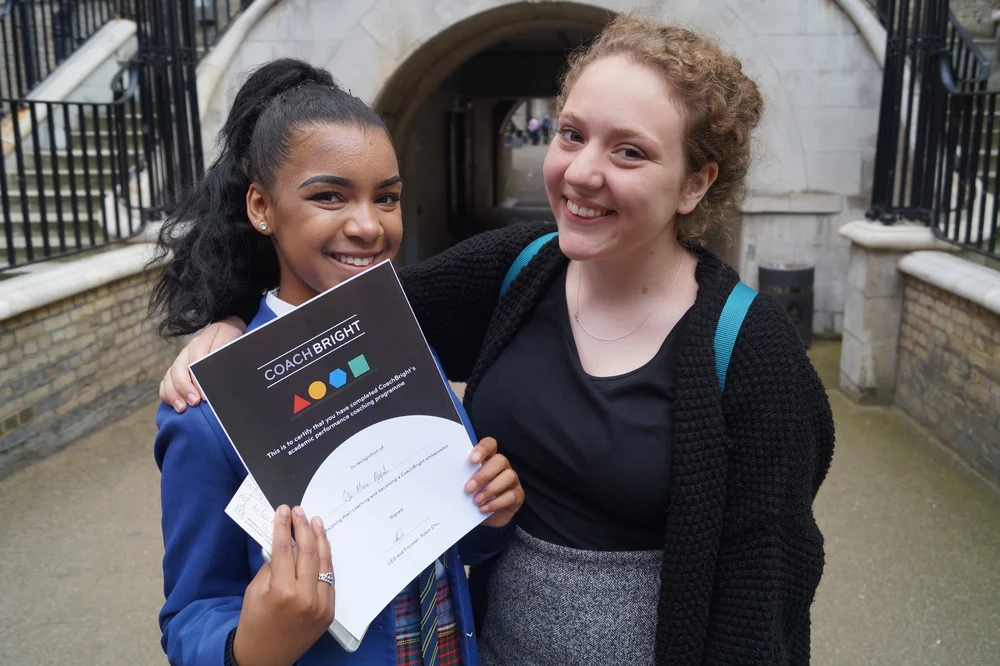

Why Being a Coach is Not Just About Coaching
“It is vital for these young people to have a role model who is able to guide them and boost their results and self-belief. This kind of support provides them with new opportunities to take a further step towards closing the attainment gap”.
Coaching with CoachBright supports students’ work ethic, improves their attitude towards their studies, and boosts their confidence in their learning. The students are able to nurture their academic abilities and receive a helping hand to reach those higher grades.
However, being a coach goes beyond school. It involves being a role model to a younger student to enable them to see that they can become reflective, independent and strong spirited learners and pave their own path for the lives they want to steer.
Consequently, being a role model for the younger generation is an extremely important role to play in our society. This is even more significant for students from disadvantaged backgrounds such as low-income families and young people who are on free school meals [1]. The attainment gap in education identifies the concern that in secondary education young people from low-income backgrounds do not perform as well as students from other backgrounds in the UK [2], thus reflecting the social mobility issue. Therefore, it is vital for these young people to have a role model who is able to guide them and boost their results and self-belief. This kind of support provides them with new opportunities to take a further step towards closing the attainment gap.
The qualities of being a role model as well as a coach are inherently intermingled in the very nature of the programme. One-to-one coaching allows university students to share their personal experiences, revision techniques and advice from when they were in school. This motivates their coachees and helps them realise that hard work really does pay off. Such guidance is tailored for the student as the relationship blossoms throughout the seven weeks of the programme. With 89% of CoachBright pupils going on to study at university in 2018 and progressing by more than four times compared to their non-coached peers [3], it is clear that CoachBright has been life-changing for young people.
Coaching is therefore about merging the direct academic support of a tutor with the life skills and encouragement of a role model. These life skills cannot be taught in the classroom. They can only be learnt through experience, with CoachBright’s programmes generating a platform for these opportunities to grow.
—
—
Blog post by Reema Chauhan, Coach on our Erdington Programme, Birmingham



How Could We Reduce the Attainment Gap in the UK?
“If all teachers were to take on the belief that no child should be disregarded, the gap in attainment between disadvantaged children and their advantaged peers would be significantly reduced”.
I have been an academic coach at West Walsall E-ACT Academy working with GCSE students between October and December, and more recently year 13 students between February and March. I hope to commence my training to be a geography teacher in the coming September, and as part of the application process I have been asked to give a presentation on why the following statement holds true in 21st century Britain:
At the end of Primary school, pupils for disadvantaged backgrounds are 9.5 months behind their non-disadvantaged peers. By the end of secondary school, the gap in attainment more than doubles to a gap of 19.2 months [1].
Currently government policies and the media increasingly target the quality of schools for the attainment gap in students, often focusing on the achievement of those at GCSE and A-level age. However, these reports often fail to acknowledge that only 14% of variability in attainment is directly due to the quality of a child’s education with the vast majority resulting from social disadvantage [2].
Like most contemporary reports, this post defines a disadvantaged child as one who is known to have been able to access free school meals within the last 6 years [1]. The financial situation of students often propagates into further difficulties within a child’s life including; engagement in school, confidence and access to opportunities which their advantaged peers may receive.
Although the ratio of advantaged to disadvantaged children in the British education system is relatively small, it is imperative for the reasons behind the attainment gap to be understood so that future policies can be influenced by these. Currently only ¼ of disadvantaged adolescents receive 5 good GCSEs at the end of year 11 [2]. Along with this, paid jobs often require a higher level of education (for example a degree), and so many of these students will follow their parents’ footsteps in minimum wage employment or receiving benefits. This extrapolates the percentage of the population who are disadvantaged.
Over the past 6 months, I have an academic coach at the social mobility enterprise CoachBright, an organisation which works with disadvantaged 10-30-year olds in Birmingham, London, Wiltshire and Exeter. I have personally observed an increase in attainment with the students that I have worked with, with the programme seeing an improvement 4.4 times larger than their peers who did not participate, likely as a result of 82.2% of students implementing a higher standard to their school work [2]. It is fundamental that young people are given the space and support to grow through programmes like CoachBright, as children thrive in conditions where the sole focus is on their development.
It has been shown that behavioural and emotional problems experienced in children between 6 and 8 significantly diminishes the probability of a child achieving high grades in school and enrolling at university [4]. Whilst it is in early childhood where interventions (similar to that of CoachBright’s primary school programme) to mitigate disadvantages are most successful [4], I believe that no child should be denied the opportunity to experience activities which appear to be standard for their advantaged peers.
Outside of school activities can help to improve self-belief [2], therefore I believe that all children should be able to access free sports groups through school, and perhaps more importantly, participate in charity work. This enables students of all backgrounds to gain an appreciation for their wider community and develop confidence within a group using creative outlets, which can be applied to their academic career. This is fundamental in improving self-confidence, as often students have a poor attitude towards learning not because they see education as pointless but because they are not nurtured in the classroom.
Furthermore, Kiernan and Mensah (2011) have shown that disadvantaged families who experience positive parenting were more likely to be successful in school [4]. In order to extend this into the child’s school experience, it is important for teachers to discuss with a student who was misbehaving why their behaviour was inappropriate rather than just disciplining them through the school’s protocol. This is because studies have shown that those who feel that they have been let down by authority figures need to have these feelings addressed before they are able to re-engage with the curriculum [2]. Not only this but education should be a shared enterprise between, parents, students and their teachers. As many parents in poverty are unable to provide the resources to help their child’s education [2], it is important for a conversation to be opened between schools and parents to allow for the provision of revision materials of pens, pencils and other necessary revision materials to be worked towards.
In conclusion, if all teachers were to take on the belief that no child should be disregarded, the gap in attainment between disadvantaged children and their advantaged peers would be significantly reduced.
—
[1] The Education Endowment Foundation (2018:2)
[2] https://www.jrf.org.uk/report/experiences-poverty-and-educational-disadvantage
[3] http://www.coachbright.org/school
[4] https://link.springer.com/article/10.1007/s13524-017-0554-6
Blog Post by Shannon Addy, Coach on our West Walsall Programme in Birmingham

How does Culture Influence us and our Learning?
“The culture and ways of thinking that our children are exposed to will determine how they will grow and the mindset they will have as adults”.
We come in the world as a “Tabula Rasa”. John Locke described it as our mind being a “blank slate” without rules for processing data when we are born, and all these are formed solely by one’s sensory experiences.
Everything we do has been influenced by an occurrence at one point in life. We all live in a social world, a world shaped by different ideas which society has been built on. These ideas make up our culture. We tend to focus on specific areas that have more meaning and relevance to us based on our individual experiences. However, the ideas that our social groups are built on also form cultural differences. When talking about intrinsic motivation, cross cultural research suggests that Americans tend to perform better if they have had some form of previous success which motivates them to progress and keep going. Meanwhile, the Japanese are more likely to do better if they are faced with failure, as that will motivate them to work harder in the future. The cultural space we live in shapes the ways we perceive various tasks. Excellence and success are the desired outcomes, but the approach to these can be different.
I studied in Romania and now I live in the UK. I have observed many differences in the way teachers deliver information, the support provided to learners and the learner-teacher relationship. In my homeland, elder teachers raised in a communist world are less likely to promote the children’s creativity and critical thinking, and rather drag them down for what they do not know. Younger teachers attempt to change this by promoting uniqueness and implementing better methods; however, the education system seems to be “on pause” rather than forward thinking and adapting to the world’s current needs.
Wherever I go, I keep asking myself “So why is this relevant to me?”. Individuals fail to see the importance of information that lies as a foundation to our world. I believe this happens often due to lack of real life examples in correlation to our current times. Learners do not see the essential applicability, especially now as technology is rapidly developing and everyone seems to be living a faster life.
By being part of CoachBright, I have discovered that by supporting our younger peers, we help them to find meaning in their learning, find their own answers, reach their potential, and approach the path they choose to follow.
The culture and ways of thinking that our children are exposed to will determine how they will grow and the mindset they will have as adults.
Blog Post by: Carla Bodea, Coach on our Erdington Academy Programme in Birmingham
Why CoachBright?
“I strongly believe social mobility should not be a factor preventing an individual to succeed to their strongest potential”
Thank you Mark for writing this blog post. We are so proud to have you on one of our programmes!
I was an Academic Coach on the GCSE Bristnall Hall Programme in Birmingham last term and have progressed to be Head Coach on the Year 13 West Walsall programme this term, whilst also coaching in A level biology.
CoachBright has been an extremely valuable experience for my professional development as an aspiring teacher by giving me the opportunity to work with students of different age groups in two different schools. This has developed my critical skills in a teaching context, such as how to motivate students and help facilitate their learning and progression.
CoachBright has opened the doors to this personal development by providing excellent training sessions, and the programmes involved me delivering 1:1 coaching sessions with another pupil for a total of 7 weeks, allowing me to witness how students develop their skills and knowledge to achieve their end goal.
The Head Coach role has improved my leadership skills by allowing me to lead and motivate a successful team of 14 coaches on my programme, partly achieved through organised socials. The task of monitoring 14 coaching pairs has really widened my perspective when it comes to finding successful teaching techniques and provided me with a lot of experience in organisation management and problem solving.
I also feel extremely passionate about tackling social mobility issues through working with students from ‘underprivileged backgrounds’ like myself and helping students aspire to achieve their long-term goals such as university degrees and beyond, irrespective of any social mobility barriers. I strongly believe social mobility should not be a factor preventing an individual to succeed to their strongest potential. It was only because of the excellent outreach support I received as a school student myself, from University of Birmingham students with UCAS applications and my studies that I felt confident in my personal and academic abilities to achieve my future goals.
CoachBright has been my first major opportunity to reciprocate this support to people who are in the same position I was in over 2 years ago. This personal connection is what has driven my passion to be a part of CoachBright and has made the experience ever so rewarding. I have really enjoyed working with Coachbright so far and I look forward to continuing to work with them in the future.
Blog Post by: Mark Perry, Head Coach on the Birmingham West Walsall Programme
The Social Mobility Issue
“Programmes such as CoachBright are essential for providing younger students with an insight into the possibility of university”
Have a read of one of our Coaches’ insightful comments into the issue of Social Mobility in the UK!
When I was at school, university was an expectation rather than a possibility. I was surrounded by students who all had the same anticipated future ahead of them. For a long time, I thought this was just the reality for people my age. However, the older I’ve grown, the more I realised that the rhetoric surrounding university and the opportunities I was given were a privilege. Britain’s Social Mobility Index proves how slow the country is with regards to offering equal opportunities to children. This generates a new question: ‘had I grown up in a different area, would I have had the same opportunities I’ve been given?’ The answer is probably not.
The UK is one of the least socially mobile countries in the world[1] which would explain why private school pupils comprise up to 40% of the intake of top universities such as Oxford and Cambridge, despite the fact that only 7% of the UK’s children attend private education.[2] Programmes such as CoachBright are essential for not only providing younger students with insight into the possibility of university, but also for reminding those studying in higher education of the impact their geographic location may have had on their current prospects. CoachBright is a vital social programme that paves the way for other initiatives to ensure that we, as a country, acknowledge that there is a social mobility crisis and that changes need to be made in order to make a very uneven playing field more equal.
Blog Post by Elizabeth Winter - Birmingham Coach
[1] https://www.theguardian.com/news/datablog/2012/may/22/social-mobility-data-charts
[2] https://www.theguardian.com/commentisfree/2018/sep/20/university-factory-failed-tony-blair-social-mobility-jobs
Why the Millennial ‘issue’, isn’t an issue
"At CoachBright, we believe that organisations often misunderstand the needs of their young workforce." Why do we struggle to work with Millennials? How can we learn to see their strengths and use them constructively in the workforce to build stronger relationships?
Robin's recent article describes the common stereotypes associated with Millennials and how to overcome them.
I am one of 13.8 million people in the UK who are called millennials and make up 35% of the workforce.
The term “millennials” broadly describes those born between 1980-1995. Generation Y is another term for this group, and the internet was born when we were children so we are history’s first ‘Digital Natives’.
Employers often see us as “ego-massaging” graduates who are not ready for the “real world of work”. The Confederation of British Industry (CBI) states that a third of companies are unsatisfied with our work because we do not show resilience, self-management and social skills. This phenomenon has been labelled by author Simon Sinek as “the millennial problem”, characterised by our need for constant praise and organisations often losing people they want to keep. In fact, around 43% of millennials plan to leave their jobs within the next two years.
However, organisations can take various opportunities to inspire the next generation of leaders to achieve their true best in the world of work. We are more purpose-driven, collaborative and creative than any other generation.
Firstly, consider purpose: 75% of millennials would take a pay cut to work for a company with more social responsibility compared to 55% of people from previous generations. Having lived through the financial crisis of 2007-08 and starting our careers in debt through student finance, we require more from businesses than just profit making. We want to work in environments that prioritise society and individual wellbeing. For example, by ensuring that CSR departments are no longer bolt-ons, but are rather well integrated within the culture of an organisation. Workplaces need to embrace the mindset of a triple bottom line: people, planet and profit, where economic success is only a third of a company’s aims with the other two thirds being the wellbeing of its stakeholders and the impact on society as a whole.
Secondly, consider collaboration and creativity. Young professionals often prefer to work in smaller, more flexible teams with shared goals and ambitions instead of competing against their peers. This is seen in part through the rise of co-working spaces in London, starting in 2012. Mainly aimed at micro-businesses and freelancers, this new trend has spread across larger organisations as well, from Innocent Drinks to Camden Council, where people no longer use fixed seating arrangements, but rather decide where to sit every day. Neil Usher, workplace director at Sky states that co-working spaces “excel in collaboration with a warm, residential and engaging aesthetic.”
Additionally, growing up in an age of constant connectivity through Facebook messaging and Whatsapp groups, millennials are natural collaborators, used to instantaneous feedback loops. New productivity tools such as Slack or Google Docs were created to stimulate quicker response times within teams. Have you noticed how younger team members embrace new technologies quicker to get the job done faster and better? For employers, this collaborative, energetic and solution-focused attitude provides great advantages.
The building blocks are there.
Then, one might ask, how come I still struggle with my young team?
At CoachBright, we believe that organisations often misunderstand the needs of their young workforce. A common feature among graduate programmes seems to be a relentless focus on learning the processes of the organisation and the knowledge required to thrive in that industry (e.g. tax exams, commercial law or information softwares). There seems to be less training in influencing others and being and behaving in a team. At CoachBright, we know you can only bring your best self to work if you understand yourself. Only through self reflection and feedback can you truly see what your strengths and areas for development are. Gaining this awareness can be just as tricky. It requires patience, training and a framework. We believe that coaching, an approach that helps learners explore and come up with the answers by themselves through exploration and challenge, is key.
That is why we have partnered with the Academy of Executive Coaching (AoEC) to launch the first of its kind Young Professionals Coaching Skills Certificate. It is aimed at people aged between 18-30 and is delivered by faculty who are themselves millennials. The course focuses on training young professionals in the coaching skills of listening, reflecting and questioning, so that they can better understand themselves in the world of work and take major steps to become their best selves in their profession.
In conclusion, we know that there is an ambitious group of future leaders out there who want to become the best they can be in their professional and personal lives. With their driven, collaborative and creative personalities, all they need is a spark from us to help them take off.
-
Article by Robin Chu, CEO of CoachBright, AoEC partner.
AoEC offers coaching, triple-accredited coach training, and consulting to individuals and organisations worldwide looking to embrace positive change through empowering people. For more information please visit the Young Professionals Coaching Skills Certificate webpage.
Why Coaching Needs to Happen Earlier on in Your Career
Most people who have heard of Coaching tend to associate it with Senior level Executives developing their own sense of self in the workplace. However, CoachBright’s Head of Programme Mary explains why Coaching is in fact needed much earlier on in life. Read her most recent article!
Coaching can be a transformational experience to help individuals become more aware of who they are, where they want to go, and how to get there. However, it has traditionally been a gift shared only with senior executives in the latter part of their career.
Fortunately, organisations who understand the benefits of coaching are beginning to offer junior members of staff this opportunity as well, and it’s promising to see coaching cultures emerge in an increasing number of workplaces. As well as helping young professionals feel more fulfilled at work, coaching contributes towards the overall success of a business, as these individuals can play a bigger part in their team and not be held back by all too common self-limiting beliefs.
For an individual to be effective in a team they must be self-aware. Understanding and owning up to your strengths, being aware of your weaknesses and having a sense of your values help when it comes to bringing your best self to a team. Self-awareness is increasingly seen as critical for ‘Millennials’ success. Consistent, honest feedback at work is one way of achieving this. Another one is coaching, which gives clients the opportunity to reflect in a safe space and gain insights into their behaviour and what drives them forward. John Whitmore notes that “the first key element of coaching is awareness, which is the product of focused attention, concentration, and clarity”.
An understanding of personal values is one element of self-awareness gained in coaching. Once someone is aware of what is fundamentally important to them in life, their decisions will be guided by this and they will make choices early on in their career that make sense for them. It is also useful for a young professional to see whether their values are aligned with those of the organisation that they are part of. Being able to select roles in companies with shared values means that an individual is more likely to find themselves in an environment where they are a ‘good fit’. In fact, personal-organisational value conflict has been found to be linked to lower job satisfaction, so the sooner an individual knows what their values are, the less time they will spend in an unsatisfying job within a company that is not right for them.
Another outcome for those fortunate enough to experience coaching early on in their career, is a significant increase in confidence. Being able to make sense of current situations in a safe, non-judgemental space, and having the time to work through possible solutions to problems can be empowering for the young professional and result in increased confidence when they re-enter the workplace. A coach can also challenge their self-limiting beliefs, such as the perception that their manager does not trust them, or that colleagues think they are too inexperienced, for example.
Being more self-confident and feeling like they work in an organisation whose values align with their own contributes towards a higher motivation at work, but the coaching process can also significantly increase their day to day personal motivation. Setting short-term goals with their coach specifically related to their jobs, employees would focus on solutions to challenges and try out these solutions to make small steps towards the goal between coaching sessions. This process empowers the individual and makes them feel more motivated, leaving them with a ‘can do’ attitude in the workplace.
-
Article by Mary McPherson, Head of Programmes at CoachBright, AoEC partner.
AoEC offers coaching, triple-accredited coach training, and consulting to individuals and organisations worldwide looking to embrace positive change through empowering people. For more information please visit the Young Professionals Coaching Skills Certificate webpage.
#5 in the Series "Voices of our Coaching Team"
Meet Nicholas (or Nick!), the Head Coach voice of this week’s series. He will be joining the London Team this term. In this blog post, Nick discusses the reasons why he loves university life and coaching.. read on!
Hey everyone! My name is Nick, and I'm studying Arts and Sciences (a liberal arts programme) at University College London. I am originally from Singapore, and I am currently in my second year of studies.
I adore university life! I enjoy the freedom and independence that I found in living away from my parents and my country or origin. I get to discover more about myself and others; and the agency I possess in charting my life course is incredibly liberating. In my first year, I tried out professional dance for the very first time, I tried out consulting pro-bono for non-social enterprises, and I made friends from all over the world in my hall of accommodation. UCL is very diverse and provides a highly inclusive atmosphere, bringing its students limitless opportunities to meet others from different walks of life.
I heard about CoachBright from my good friend Nicole, and I have never regretted the decision to volunteer. CoachBright is unlike any other social enterprise that I have worked with in the past - it is brimming with vibrant energy, and this can be attributed to the boundless optimism that the entire management team bring to their work. Even as a student Coach, I was a part of a collaborative atmosphere that was inclusive and motivational. It definitely encouraged me to bring my best self at every session.
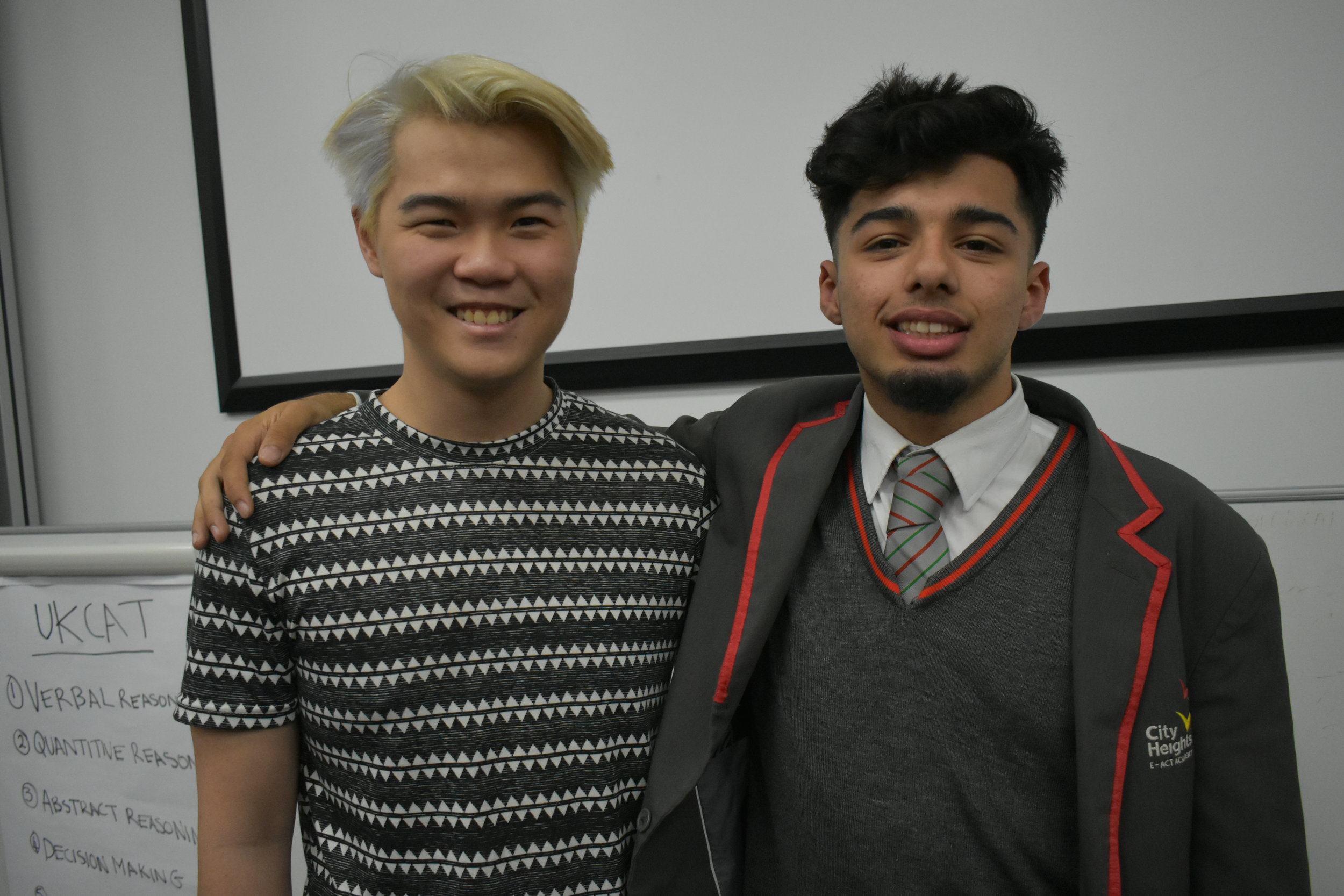
The photo above was taken at my coachee Tariq’s graduation from the CoachBright programme. Becoming a part of CoachBright will allow you to establish a close relationship with your coachee, inspiring them to work hard in their studies to join you in university, while enabling you to build your skills and confidence in coaching.
Blog post by: Nicholas Oh
We are hiring! Care about social mobility? Join us driving our programmes forward. Roles in South West and London.