Our final blog of the year comes from Programme Manager, Jackie Zammit, who leads our vital work in the North East. Jackie brings a rich background in geography, development education, and peace education and has spent her career working with both primary and secondary schools across the charity sector. She is deeply passionate about working alongside young people and advocating for their voices and experiences.
We hope you enjoy Jackie’s reflections. And, fittingly, on the theme of peace, we wish everyone a happy Christmas and a wonderful New Year.
————————————————————————————————————-
For the past fourteen years, I have worked in the Peace Education sector in the West Midlands, exploring what peace looks like and feels like in everyday school and community life. My work has focused on how thinking from a peacebuilding perspective can positively change the way we live, learn and work together.
My contribution to Coachbright’s mission of making social mobility a reality centres on relationships, particularly those with and between the young people we work with. Relationships sit at the heart of peacebuilding, and they are where change most often begins.
Let me introduce you to Sam…
First Encounters
It’s the first time I have brought together a group of Year 10 coaches with their Year 7 coachees. We are in a large classroom. The Year 10s instinctively gather on the right‑hand side of the room, the Year 7s on the left, some looking apprehensive. Everyone is chattering.
The Year 10s are worried about how much work I will expect of them. The Year 7s are fidgety and noisy; they don’t know one another, and there is a mix of curiosity and suspicion in the air. Then the door bursts open and in walks Sam*. He throws his bag onto a table and then lies on top of it, looking straight at me with a twinkle in his eye, daring me to think carefully about my next move.
I’m smiling, inside and out. I can already tell that Sam is going to teach me a lot. His energy is infectious, and alongside optimism, hope and intrigue, a familiar fear is creeping in.
Choosing a Peacebuilding Response
I am working with young people across three secondary schools, delivering a coaching programme focused on maths. The programme itself is new to me, but the peacebuilding strategies I draw on are well‑tested. I also know how delicately they must be used: the same approach can build trust and cooperation, or break it.
In the few seconds it takes me to respond to Sam, there is a lot of meta‑thinking going on. It would make things easier for me if he sat on a chair — but would it help him? Or the rest of the group? What is my role here? I want Sam to be included and engaged for the full ten weeks of the programme. If I respond in a way that undermines trust, what might happen next?
I don’t draw attention to the fact that Sam is sprawled across the table. Instead, I simply ask, “Which chair would you like to sit in?” — a parenting hack I once learned and have never forgotten. Sam climbs down and slumps into a chair, eyes still sparkling.
Another teacher answers his questions about the posters in the classroom, calmly and respectfully, before she leaves. A second teacher rounds up a few latecomers, then suddenly, I’m on my own with the group. The noise level rises as I try to begin.
Looking for mutual respect rather than compliance, I say, “I’m finding it hard to explain what’s going to happen next, and I’m feeling a bit frustrated. I’ve planned an activity to get us moving around, and then we’ll get into our coaching pairs. How does that sound?”
The ‘I‑statement’ lands. The room quiets, and most of the group turns to look at me. We start with icebreakers and then move into coaching pairs. Sam is placed with two Year 10 coaches, Tom and Jordan*. I leave them to it, curious about how they will get on.
What Do We Mean by Peace?
Peace means different things to different people. How we define it depends on who and where we are, who we are with, and when we are asked the question. Conversations about peace often focus on preventing violence or reducing harm. When asked what peace means to them, Year 4 and 5 children have said things like “no war” or “when you don’t have to shout.”
During my time in Birmingham, I worked with a group of vulnerable women over ten weeks to explore peace through different lenses. We started with negative peace — the absence of harm or conflict. We talked about what gets in the way of peace in their lives. They said:
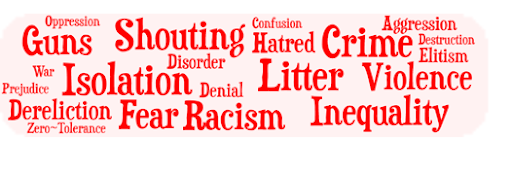
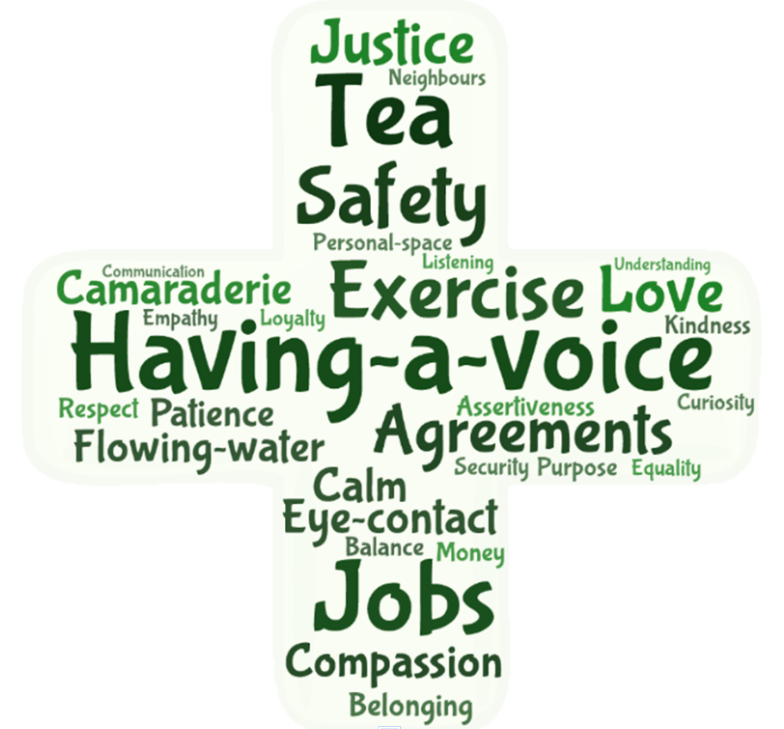
Peace is more than the absence of conflict. The concept of positive peace, developed by Norwegian scholar Johan Galtung, challenges us to think beyond crisis response and towards creating the conditions that allow people and communities to thrive. Positive peace is built through fairness, opportunity, belonging and social justice.
When asked about peace from this perspective, children have described it as “everyone relaxing together on the sofa,”“treating people equally,” and “having self‑confidence.” The women I worked with in Birmingham spoke most often about having a voice.
Peace and Young People in the North East
The challenges facing young people in the North East are well-documented. Child poverty in working households has risen by 44% since 2010, the highest increase in the UK (TUC, 2024). Educational outcomes lag behind national averages, with fewer young people achieving Level 3 qualifications (Education Partnership North East, 2024). Unemployment and economic inactivity remain higher than the UK average (North East Chamber of Commerce, 2025), and young people in deprived communities often have half as many youth club places as their peers in the South (Northumbria PCC, 2024).
These are not only economic or policy challenges; they are also issues of peace and well-being. They shape young people’s sense of safety, belonging, agency and hope.
Peacebuilding in Action
This first session is only the launch of the programme. Coaching begins the following week. Yet even now, Sam is holding a piece of paper and confidently explaining fractions to Tom and Jordan. They look genuinely surprised. Jordan turns to me and says, “This kid is not stupid!”
Up to this point, Jordan has seemed disengaged. Now he is animated and involved. Across the room, the energy has shifted. The noise remains, but it is different — purposeful, collaborative. Young people are getting to know one another and making plans together.
By week two, Sam bounds into the room asking, “Where’s Tom?” When Tom arrives, Sam sticks close to him. Coaching pairs huddle together, some spilling out into the corridor, thanks to a teacher who recognised that a cramped classroom would not help this group thrive. The coaches come prepared, logging onto maths quizzes, printing worksheets, and working together with confidence.
Research by Dr Michael Ogunnusi with marginalised young people highlights how they actively create their own forms of peace, despite adversity. He describes this as “everyday peace” — the small acts, relationships, and coping strategies that foster stability, emotional safety, and a sense of belonging. Young people often understand peace as feeling safe, being recognised and respected, having stable relationships, and being able to express themselves. Structural inequalities — poverty, racism and educational barriers — can undermine this sense of peace as profoundly as interpersonal conflict.
What I am witnessing in these classrooms is everyday peace in action.
Building Peace Together
A Year 3 pupil once said to me, “Peace is hard work, isn’t it Miss?” It is. And it rarely happens by accident.
So, who is creating the moments of peace I am witnessing here? Is it the teacher who is in regular communication and problem-solves with me? Is it Tom, whose steady, non‑judgmental presence allows Sam to relax and feel safe? Is it Sam, who accepts Tom’s hand of guidance and connection? Or is it me, trying to choose responses that prioritise trust over control? We all have a role to play.
Peace is built through relationships — intentional, everyday acts of care, respect and collaboration. When young people experience belonging, agency and hope, they are not only improving their own life chances; they are strengthening the social fabric of their communities. In supporting young people to lead, connect and believe in themselves, we are not just addressing educational outcomes — we are building peace in the North East, one relationship at a time.
Names have been changed.
References
Education Partnership North East (2024). Regional Education and Skills Data Report.
Galtung, J. (1969). Violence, Peace, and Peace Research. Journal of Peace Research, 6(3), 167–191.
North East Chamber of Commerce (2025). Economic Performance and Labour Market Overview.
Northumbria Police and Crime Commissioner (2024). Youth Provision and Community Safety Briefing.
Ogunnusi, M. (Year). Everyday Peace and Marginalised Young People. [Research on youth wellbeing, identity and peacebuilding].
Trades Union Congress (TUC) (2024). Child Poverty in Working Households: UK Regional Analysis.