

BLOG

#1 in the Series "Voices of our Coaching Team"
Meet Erika - one of our former coaches on the Stoke Newington Programme. In this blog post, she writes about her experience as a coach for CoachBright, and why it was all worth it!
January signalled the beginning of a new year, and with that my first time volunteering at CoachBright. Needless to say, I was nervous about the whole thing. Filling out the application form, doubts were swirling in my mind as to whether or not I was good enough for the role. Would there be an interview? If so, would I have an intimidating interviewer looking down disdainfully at my lack of experience and credentials? However, these thoughts abruptly came to a halt. For as soon as I had submitted my application form, I instantly got an e-mail inviting me to partake in a coach assessment day. I went feeling even more nervous about having to be assessed, as well as the fact that I would know no one there.
For the second time, CoachBright surprised me. To my relief, there were no critiquing middle-aged adults ready to whisk me into a room for an interview. Instead, I was greeted by people who were both friendly and practically my age! I could finally breathe with the knowledge that I had met friendly faces.
Two painless training sessions went by, and I was quickly assigned to a seven-week programme in Stoke Newington. I was introduced to a sweet girl who had dreams of dabbling in criminal psychology, but struggling in aspects of AS Psychology. For our hourly sessions therefore, I helped my coachee to slowly overcome the difficulties of the subject. Likewise, I overcame the initial hurdle of preparing for these sessions and organising my time between CoachBright and my own priorities at university. Not to mention to need for refreshing information that I had completely forgotten after finishing my A-Levels a few years ago! However, the entire experience was enriching, and I would honestly volunteer again.
As someone who struggles with self-doubt, my English GCSE teacher took extra time out of his day to help me improve my grades and my confidence. If anything, I wanted to give that same help and become that same figure for my coachee.
Blog Post by: Erika Hayashi

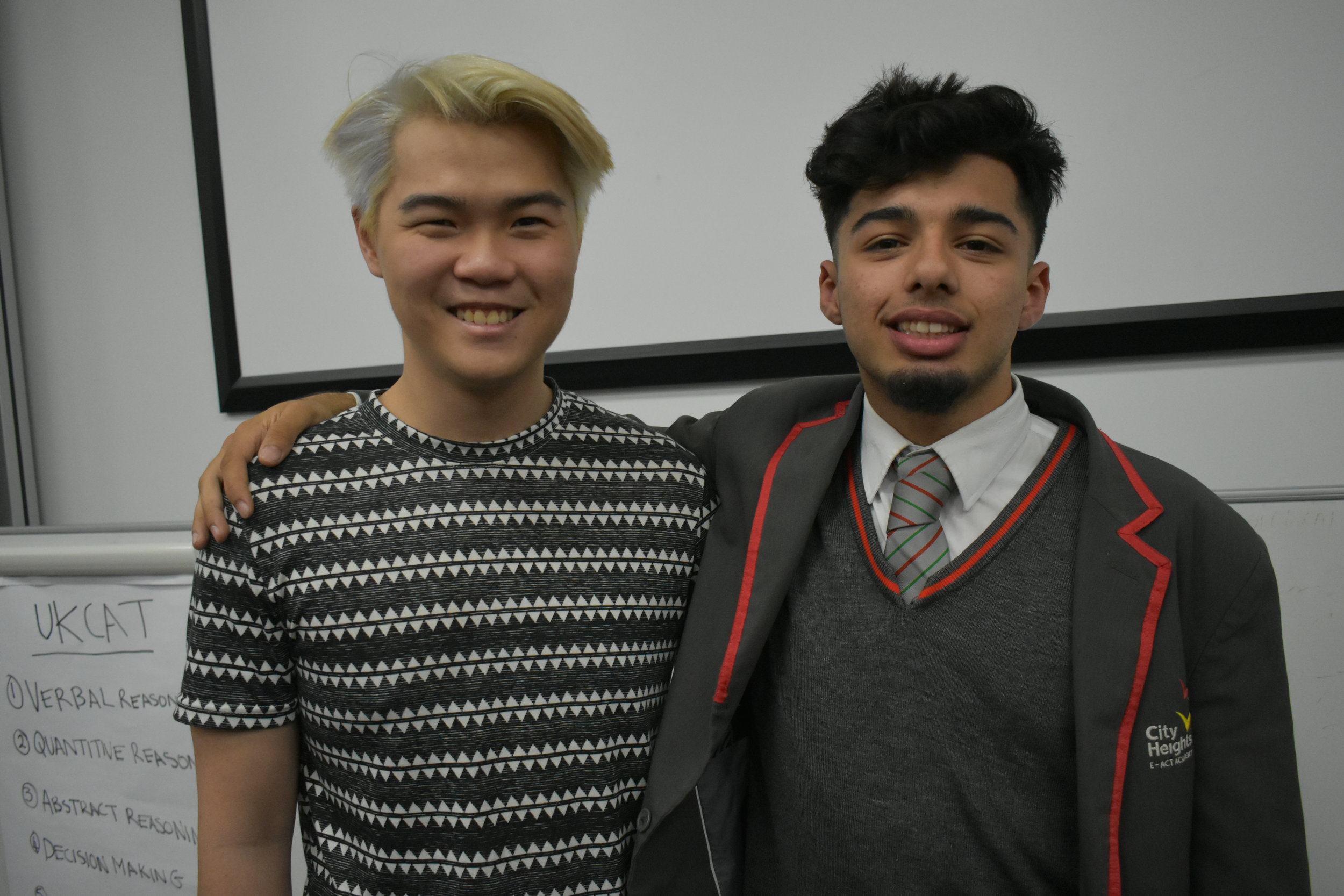


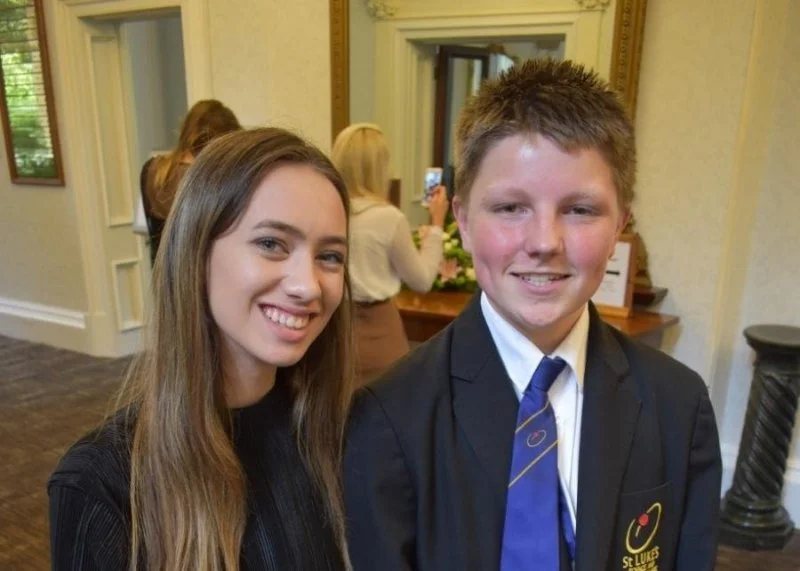


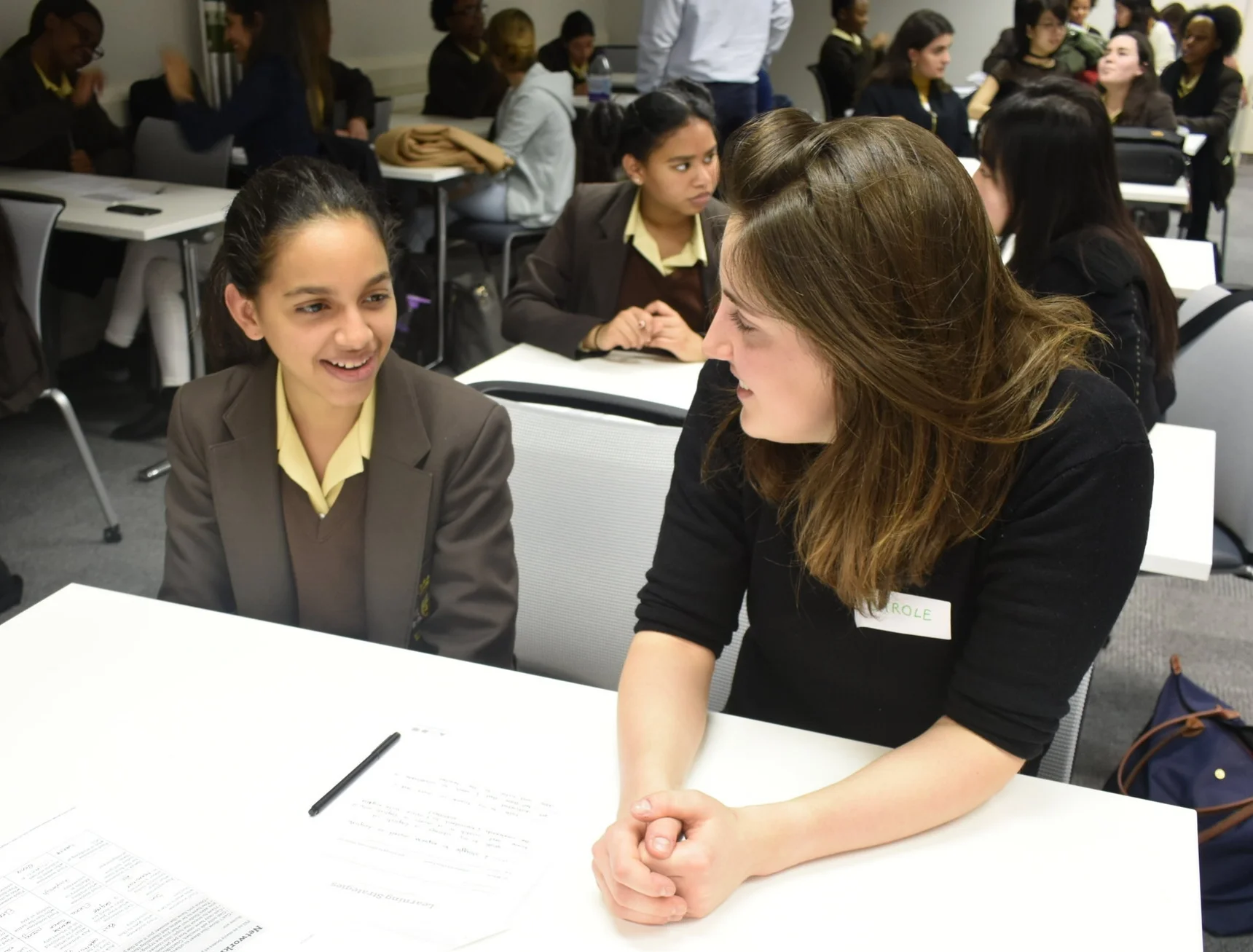
Meet Carole, our new member of the team!
Carole is our new London Programme Officer! In this blog post, she describes how volunteering and working with young people inspired to start her career at CoachBright.
Hello everyone! My name is Carole, and I am the new London Programme Officer at CoachBright. I am very excited to be a member of the enthusiastic and ambitious CoachBright team. When I started university, I decided to make the best of the LSE Volunteer Centre and its opportunities in order to develop new skills and discover what I am truly passionate about. Over the last three years, I discovered how much I enjoy spending time with young people, especially in an academic context. I volunteered as a mentor and coach, and I ended up writing my dissertation on schooling and education systems in the West. In my last year I also worked as a Head Coach, a role that gave me a lot of responsibility and helped me to develop my interpersonal, public speaking and organisational skills. I am looking forward to pursuing this path by starting my career in a social organisation that tackles educational disadvantage and inequality in the UK. I am sure I will learn a lot from this role, both on a personal and professional level.
Oh, I almost forgot: last Christmas, the CoachBright team hosted a wonderful Christmas Party for coaches and staff. They had fresh mince pies warm from the oven which are one of my favourite holiday treats. I must have eaten 10 of them in a row. Another reason for me to join the CoachBright team right there! ;)
I wish the best of luck to all the students, coaches and staff in the new academic year.
Together we can continue to do great things and have an impact!

SOUTH WEST HIRING! Part-time vacancy in Exeter
We are hiring for a part time Programme Officer in Exeter! Deadline is Wednesday 8th August.
Hiring 2 Days a Week - Exeter Programme Officer
CoachBright is an award-winning, fast-growing social enterprise on a mission to support young people from the ages of 10-30 to identify and fulfil their potential.
We do this in two ways. Firstly, by helping pupils from low-income families become independent and resilient so they can lead the lives they want. We believe your background should not determine your future. Our programmes improve a pupil’s grades, confidence and expectations so they can win places at top universities.

Secondly, we train young professionals in coaching skills to develop their interpersonal, communication and leadership skills as well as their self awareness.
We’re at an exciting stage of growth in our fourth year. Working across London, Birmingham, Devon and Wiltshire, we are expanding to work with over 1,000 pupils. For the first time, this will be from Key Stage 2 right up to Key Stage 5.
Exeter Programme Officer Part-Time
We are looking for a rising star to join our passionate team and drive our programmes forward. The Programme Officer will recruit passionate volunteers, deliver our training and workshops, and manage day-to-day school delivery in the South West. This is an in at the deep end role and s/he will flourish in a small dynamic team with real influence in decision making.
Exeter Programme Officer (2 Days a week) role and how to apply please click here.
Any questions, please email robin@coachbright.org


HIRING! Vacancies in London + Birmingham
We are hiring for Programme Officers in London + Birmingham! London deadline is 21st June 2018 and Birmingham deadline is 12th July.
CoachBright is an award-winning, fast-growing social enterprise on a mission to support young people from the ages of 10-30 to identify and fulfil their potential.
We do this in two ways. Firstly, by helping pupils from low-income families become independent and resilient so they can lead the lives they want. We believe your background should not determine your future. Our programmes improve a pupil’s grades, confidence and expectations so they can win places at top universities.

Secondly, we train young professionals in coaching skills to develop their interpersonal, communication and leadership skills as well as their self awareness.
We’re at an exciting stage of growth in our fourth year. Working across London, Birmingham, Devon and Wiltshire, we are expanding to work with over 1,000 pupils. For the first time, this will be from Key Stage 2 right up to Key Stage 5.
London and Birmingham Programme Officers
We are looking for two rising stars to join our passionate team and drive our programmes forward. The Programme Officer will recruit passionate volunteers, deliver our training and workshops, and manage day-to-day school delivery in London. This is an in at the deep end role and s/he will flourish in a small dynamic team with real influence in decision making.
London Programme Officer (Full Time) role and how to apply please click here.
Birmingham Programme Officer (4 Days a week) role description and how to apply please click here.
Any questions, please email robin@coachbright.org

What's being a Head Coach really like?
Head Coach Maria Haq writes about her experience leading the City Heights programme this term and why you should consider Head Coaching!

Head Coach Maria Haq writes about her experience leading the City Heights programme this term and why you should consider Head Coaching!
Having really enjoyed my time coaching two different pupils, the opportunity to be a Head Coach seemed a really nice way to come back into CoachBright after a semester abroad in Germany. Being a Head Coach has allowed me to put the leadership skills I developed abroad to the test and to work on other areas of personal development such as my confidence and communication skills.
I’ve really enjoyed contributing to the running of CoachBright on a broader scale, as I have been able to liaise with teachers and make a real difference. It is so important that coachees get as much as possible out of their 7 sessions and it’s really rewarding to be in a position where you can make that happen. I have loved watching the progress that each pair has made and positive feedback from the teachers really reinforces how great the work is.
As well as managing the logistics, I do enjoy doing some coaching alongside my Head Coach duties too! Sometimes it’s necessary to step in and cover for one of the coaches but, with CoachBright expanding the way that it is, there are such a variety of different roles to get involved with alongside being a Head Coach. As it’s such a flexible role, I’ve been able to meet lots of coaches and coachees and I have learned a lot from interacting with such a wide variety of people.
CoachBright is the kind of voluntary experience which is relevant to so many different professions. As I go forwards into my role as a Trainee Pharmacist, I will be equipped with experience in problem-solving and working as part of a large, diverse team. Something which I think is unique to the role of Head Coach is that you’re really able to make it your own and so there’s so much opportunity to use your initiative. I think it’s great that Nicole got involved with setting up a ‘London CoachBright Society’ and she’s done some brilliant work as a ‘Social Secretary’ too!
To summarise the day-to-day role of Head Coach I’ve included a list of roles/responsibilities which you could expect:
Getting to know coaches and coachees – I organised a meet up at the beginning of the program so that coaches could get to know each other and find people to travel to the school with
Ensuring good attendance – Reminding everyone to send out reminders! Also: chasing up absences and making sure missed sessions are rescheduled
Involving the school – Talking to the teacher in charge and keeping them informed
Enjoying watching the sessions take place! – Taking pictures to share on the Facebook page
Getting feedback – From coachees at the end of the session; debrief with coaches + feedback forms; comments from teachers
Workshops – Launch programme at the beginning as well as the mid-training workshop
Graduation! – Contribute to a fun event with your team which marks the end of the programme
Maria is a final-year King's College London student who has been a Head Coach on the City Heights programme in London this term.
Applications to be a Head Coach with us on next year's programme are open until 26th April. You can apply by filling out an application form here.



Wrapping up #EducationalJusticeUK campaign and Annual Report 2016/17
In the last of our #EducationalJusticeUK blogs, CoachBright founder Robin looks at why the focus of our campaign is so important.

By Robin Chu, CEO and Founder of CoachBright
“While the government seems unable to devote the necessary energy and focus to the social mobility agenda, I have been heartened that others in civil society – from local councils to major employers – are actively embracing it.” These are words lifted directly from Alan Milburn’s resignation letter from being Chairman of the Social Mobility Commission 2 weeks ago. Most of the press coverage has focused on the first part around poor political leadership and the lack of energy outside of Brexit from our nation’s politicians. We must instead look to those who are actively supporting the social mobility movement.
Our campaign around #EducationalJusticeUK concludes this week and we made a conscious choice to focus on what works and what is being done to improve social mobility for our most disadvantaged pupils. We do acknowledge, however, that more needs to be done and quicker. At our current rate, it will take 15 years to narrow the ability gap between rich and poor at the age of five, and 80 years to close the gap in higher education participation rates.
While the progress of social mobility may be slow, it is heartwarming to see so many individuals and organisations driving significant change. Take our live tweetchat around the issue. Headteachers, teachers and education organisations from across Manchester, Essex, Exeter and London all engaged:


There is a swell of energy and excitement driven from the ground up - passionate committed teachers launching #TeachMeet’s #WomenEd, #BameEd events across the country. Clearly, as educators, there are key examples of us taking the fight to social injustice.

This very fight is at the top of CoachBright's agenda - our work aims to help close the educational gap between the rich and poor. This seems like a great moment to release our Annual Report 2016/17 (last academic year) to the public! In it, we detail the impact, successes and mistakes we have made. Here are some quick highlights below:
Class of 2017: 70% of CoachBright pupils have gone to the UK's top third most selective universities.
Grade impact: CoachBright pupils improve their subject grade 2.2 times more than their non-coached peer.
CoachBright has supported 343 pupils over last year.
Please do have a read here and we would love to hear your thoughts.
If you are interested in what we do as a school leader, corporate or to volunteer please do reach out and get in touch at robin@coachbright.org



From Rural to Urban: My Student Journey
For the final week of our #educationaljusticeUK campaign, Exeter University student and Coach Wil Jones has written about his personal experiences journeying from an agricultural college to a large university campus and the issue of engagement.
By Wil Jones, University of Exeter Student and Coach
When I was in secondary school, the nearest university was half an hour’s drive from home: a small, specialist agricultural college in the heart of the countryside. It felt a world away from my conception of university at the time – that they were these vague, distant establishments dotted around the country, places people would flock to, optionally extending their education in order to experience the bright city lights.
That muddied idea of what university was and could be – and the disbelief that anyone would want to choose to go there – came from a place of misunderstanding: a disengaged 15 year-old’s misconception proving to be just as big a barrier as any physical distance from a university campus.
My school became a Business and Enterprise College shortly before I started there, and over five years there was an evident transformation; as well as an impressive new sports hall, a purpose-built business centre and reception area was built.
For all the evident benefit and appeal of these developments the effect on the student body wasn’t always easily discernible. The near-mandatory requirement to study some form of business-related subject at GCSE was alienating for the significant portion of 14 year-olds who weren’t enthused by the prospect of profit margins, and other areas within the school – not least the creative elements I engaged with the most – felt like little more than an afterthought when it came to funding.
During my final two years at school, there were subjects I loved, with truly inspirational and supportive teachers, yet sadly there were also subjects where this was not the case, and – exacerbated by negative experiences outside school – it became an unhappy time. Despite this, I left school with generally good grades, albeit having lost interest in the sciences that had at one point been utterly captivating, resulting in my choosing not to continue with them as I moved towards the sixth form.
Once in the sixth form, at a post-secondary college, the disengagement I had felt in school ossified in this new environment. As some of my friends went through the process of applying to university, and others prepared for the world of work, I struggled to do either. Although I worked hard to pass my A Levels whilst also holding down a part-time job, good grades felt more than a little inconsequential once I left college unsure at how to apply them to a work setting.
In the end, with a good portion of my friends having left the town, and with others settling into vocational work, it was only due to the incredible persistence of a friend that I applied to university at all. Having someone passionate and supportive is utterly integral to motivation and achievement and something I have found so common amongst the CoachBright coaches I have had the pleasure to meet and coach alongside.
I am now coming towards the end of my time at Exeter University, where I am studying English. Doing a part-time degree, although an uncommon route to take, has enabled me to slowly acclimatise to university life whilst also earning through a part-time job. That process of adaptation has been a lengthy and at times difficult one, in no small part due to my previous disengagement; when I arrived, I had never stepped foot on a university campus before, let alone attended an open day. In short, I was largely unprepared, despite achieving quite well academically.
CoachBright has undoubtedly been one of the highlights during my time in Exeter. Having been given a truly inspiring and eye-opening framework on coaching, the opportunity to help my coachee in a focused manner with their academic work – whilst also encouraging more general aspirations – has been rewarding personally, but also hopefully provides that crucial support to a student when they need it most.
In my experience, engagement goes beyond attendance or whether a student does well in their exams; whilst good grades are key to achievement and I would encourage every student to aspire to do their very best, a more holistic approach to education can undoubtedly aid that aspiration, in turn improving engagement, achievement, and social mobility as a whole. The manner in which the CoachBright coaches have inspired their coachees has been heartening to see; I wouldn’t hesitate to recommend any students interested in becoming a coach to do so.
Coming to Exeter I was surprised that it didn’t feel a world away from where I grew up despite my previous preconceptions; so much so that I often describe it as larger, similar version of home ‘but-with-a-university’. It’s a fairly crucial ‘but’, however, as during my time here the 15 year-old’s expectations have been utterly shattered. Whilst the hills may feel familiar there are so many aspects that have been challenging and rewarding in equal measure; rather than this being a reason to dissuade people from applying to university, I believe it reinforces the need for young people to have someone supporting them to not be put off by the daunting elements that come with pushing yourself as there is so much opportunity at university, and access to those opportunities should not be limited by social disadvantage.
The manner in which CoachBright demystifies university with a supportive platform helps young people to make informed choices on their futures, and I believe that can be just as important as good grades.
Wil Jones is a third-year English student at University of Exeter and has been a Coach with CoachBright since September 2017.

Improving University Access
Martin Hanlon, Associate Assistant Principal and Director of Learning Yr12 & Yr13 and Learning Development at Ark Evelyn Grace Academy, writes for us about what both schools and universities can do to widen university access to the most disadvantaged students.
By Martin Hanlon, Associate Assistant Principal and Director of Learning Yr12 & Yr13 and Learning Development at Ark Evelyn Grace Academy
In the week when the Sutton Trust produced their annual state of the nation report, with Sir Peter Lampl stating that there is a ‘worrying and complex regional divide’ in the country and that there is a need for us to be ‘raising the game’ of all teachers, it seems pertinent to reflect on the ways that schools can impact on social mobility and improve the lives of their students, whilst promoting a fairer and more equal society. In many cases this means increasing the numbers of students that schools send to universities, particularly the more competitive ones, although it is recognised that good quality apprenticeships and other routes into employment are improving all the time.
I think the first thing that can – and should – be done is to improve and enhance links and relationships between schools and universities. I speak from a position of privilege, working in London and I am conscious that we are surrounded by a lot of universities, some of which are among the very best that the country has to offer. All universities are conscious of the social mobility agenda and most do a decent job at offering opportunities to engage with schools. Some, such as UCL, are exceptional in this regard, offering a number of opportunities throughout the year for teaching staff and students. Yes, it can be difficult for both schools and universities to make links – but it is vital that young people are exposed to higher education from as young an age as possible if they are going to raise their aspirations and set out on the path to academic success. After all, you can’t aspire to something that you don’t know exists.
Schools – both primary and secondary - should run regular trips and visits to universities and universities need to become expert in welcoming students of all ages and all backgrounds, developing long-term and meaningful relationships with young people. In the same way, universities should visit schools and it would be great to see strong relationships being developed between schools and their local universities – especially in areas highlighted in the Sutton report that continue to struggle with social cohesion. Organisations such as The Brilliant Club and intouniversity already work across the sectors and this action needs to be replicated on a wider scale.
It is also important that schools show their students what academic excellence looks like. This can be done in many ways, but one of the most effective ways is to provide opportunities for students to work alongside undergraduates and post-graduates. CoachBright excel in this area and other programmes, such as Futures, Realising Opportunities and the Social Mobility Foundation course run by the Sutton Trust, provide excellent opportunities for students to develop meaningful dialogue with real people who work, study and learn with universities every day. Teaching staff - who have all been to university – should also act as role model exemplars of an academic education and should be encouraged and supported in sharing their learning journeys with their students. Conversations and dialogues about the joys and challenges of education and learning should be embedded into every aspect of school life.
Careers advice and guidance is crucial, especially when it comes to post 16 decisions. At the school I work in, we offer a relatively small range of A Levels – mainly facilitating subjects - which means that students are being prepared for applications to competitive universities and their choices of subjects will not disapply them. It’s challenging and hard work, but one has to be pragmatic and practical.
Finally, if you are lucky enough to be able to do so, use your alumni. The best role models for young people are those who were once them and have been able to focus on their goals, achieve academic success and can now share their experiences with others.
So, there’s no guarantees, but employing some of the strategies above might make a difference to improving the lives of your students and taking one more small step along the road to greater social mobility and cohesion.


Levelling the Playing Field
It's Week 4 of our #educationaljusticeUK campaign and Matt Jones, Principal of ARK Globe Academy in London, has written about the problems with access to university and what can be done to help.

By Matt Jones, Principal of ARK Globe Academy
Recent media reports have made clear that there is not a level playing field when it comes to social mobility and access to university. Only 7% of the population has had the choice to attend an independent school, yet this small percentage is wildly over-represented in our top universities and in their access to the best and highest-paying professions.
This situation has motivated 108 MPs to write to our most prestigious universities calling for significant changes to end this "social apartheid". More worryingly, the Social Mobility Commission’s report, Time for Change, indicates that despite billions of pounds of taxpayers' money being spent on policies to improve access to top universities and the professions, very little has changed in 20 years.
In fact, if you are a state-educated child today, you are much less likely to work in medicine or become a journalist compared to 30 years ago.
During the five years that I have been Principal at Ark Globe, the gap between independent school educated children and state school educated children accessing the most selective universities has actually widened. The government provides universities with approximately £800m each year to improve access to higher education.
Clearly, this strategy is not making a difference.
Ark Globe, in south-east London, is in an area with high levels of economic deprivation – it’s an area where very few parents are able to afford an independent school education, meaning their children face an enormous statistical disadvantage when it comes to accessing the best universities – before they’ve even cracked a book.
Yet despite this, 100% of Ark Globe’s sixth form students received a university offer last year. Of those, 62% went to a ‘top third’ university and 48% to a Russell Group university. We are particularly proud of Zareen, the first Ark Globe student to be admitted to Oxbridge. She is now studying Human, Social & Political Studies at The University of Cambridge and such is her achievement that the BBC’s World at One programme is tracking her progress throughout her first year at university.
The percentage of Ark Globe Academy students accessing top universities is approximately three times the state school national average (23%) and is similar to that of independent or fee-paying schools (65%).
So, how did we achieve such impressive outcomes for our young people?
There is no simple answer, but importantly, we have worked hard to create a culture of aspiration and high expectations, something I have spoken about in many different forums. This is reflected in Ark Globe’s mission statement: ‘Preparing our students for university and to be leaders in their community’.
The fact is that being ambitious and earning strong exam results are not enough. Young people also need access to opportunities and the cultural capital required for university access and success. At Ark Globe we also work to provide some of the same opportunities for our students that pupils from more financially advantaged backgrounds get to enjoy. These include university visits, networking days and mentoring sessions.
We have a team of extremely knowledgeable and dedicated teachers and support staff, assisted by the Ark Pathways & Enrichment team. Their job is to reach out to organisations and institutions that can help to prepare our children in accessing the best universities or apprenticeships – anything to help even the playing field.
Our enrichment programme features a wide range of external speakers and cultural experiences that guarantee our students know what to expect and how to conduct themselves in our elite higher education institutions. These activities help to build their confidence, deepen their understanding of university life and ensure that nothing – or at least very little – is a surprise to them when they eventually attend university.
Finally, our students are encouraged to be independent and take matters into their own hands. Our sixth form students often make connections with professions and organisations in employment sectors that interest them through their very own Ark Globe networking event, through social media or via personal contacts.
The Ark Globe community; parents, students, staff, local residents and corporate partners are all committed to working together with the aim of ensuring our children have the same opportunities as any another child in the country, regardless of their postcode, ethnicity or wealth. Sadly, this is not the case everywhere.
While I am obviously proud of what we have accomplished so far at Ark Globe, I don’t think our school should be a statistical anomaly. I often speak to many other successful leaders in education doing amazing work in the toughest of circumstances. Like me, they are concerned that their students are not getting a ‘fair crack of the whip’. I wonder what we could achieve if government were to give some of that £800m directly to schools?
£184 million (24%) could provide funding for every state secondary school in England to employ a careers advisor and university access coordinator.
£80 million (10%) would let us send all secondary school students every year on a visit to a university.
£40 million (5%) would buy access to expert mentoring for all 16-18 year olds in sixth forms.
I do not suggest that these investments alone would be the key to unlocking the potential of all children, but these are a few examples of how schools could use the money to improve access to our most selective universities. We need the success of students at Ark Globe to be a standard, not an exception. Our current national policy on social mobility is failing, and without major reforms the divisions and inequalities in our society will widen and grow.
With adequate funding for the non-academic support needed to improve access to university and top professions, I believe schools are in the best place to enhance social mobility; after all, they know their children, families and community. My hope is that by properly resourcing and empowering schools and their local communities, the success of young people like Zareen will no longer be a newsworthy story, but rather just another everyday example of a student fulfilling his or her potential.
1. Time for Change, Ch.4, P.79
2. DfE: Widening Participation in Higher Education
Matt Jones started his career as a professional footballer before going into education. A graduate of Ambition School Leadership’s 'Future Leaders' programme, Matt has been Principal of Ark Globe Academy since May 2012
Best Pupil Premium Practices
For Week 3 of our #educationaljusticeUK campaign, Stephen Farmer, Headteacher of Cranbrook Education Campus in Devon, shares his top tips and principles for the best possible Pupil Premium strategy!
By Stephen Farmer, Headteacher of Cranbrook Education Campus
When asked what works well in terms of a Pupil Premium strategy, I always respond that it is about the culture of the school. Staff need to know who their disadvantaged students are and what individual struggles they are facing. We talk about treating disadvantage as a SEND need and ensuring each student has a key adult, usually their tutor and a passport outlining how staff can best engage with and support them.
The core principles we adhere to in all our Trust schools are:
A senior member of staff having responsibility for the outcomes and well-being of disadvantaged students.
Working with CoachBright to ensure Key Stage 4 students have access to an inspirational coach who can help motivate them with their work and hopefully aspire them to explore further and higher education
Use ProvisionMap to track and evaluate all provisions that utilise Pupil Premium funding. Ensuring the best provisions are shared across the school and those that are not having impact are stopped.
Some additional top tips that I would suggest are:
Seating plans are a non-negotiable and staff are able to articulate who their disadvantaged students are and why they are sat where they are. We use ClassCharts which is a great tool as it also is our behaviour management and homework setting system.
An effective outcomes analysis system that ensures all Disadvantaged students are clearly identified and requires staff to document interventions they will implement to support disadvantaged students who are not making the expected progress.
Breakfast club. The most important meal of the day. We work with Exeter Food Action to reclaim food from super markets and our support staff support the club on a rota. Check out the TED talk from Sam Kass called; Want kids to learn well? Feed them well. https://www.ted.com/talks/sam_kass_want_to_teach_kids_well_feed_them_well
Extra-curricular support. The most difficult to evaluate but important for the moral purpose. Many disadvantaged students do not have the cultural capital to bring to the table. By supporting them with extra-curricular activities and to engage with trips, you help them contribute to class discussions and give them experiences to write about.
Attendance. Prioritise the attendance of disadvantaged students. Get on the phone early when they are absent. Have a family liaison staff member who is able to go round to houses and collect students when needed.
Targeted questioning as a non-negotiable. Expectations of disadvantaged students should be high and they should be targeted for questions in lessons.
Mark first. Implement this as a policy and ensure disadvantaged students are getting the best feedback from their teachers.
Homework. Disadvantaged students need to have the same expectations to compete homework but they often need additional support to complete it. Develop a homework club, engage their tutors and ensure they have the resources they need to complete additional work.
Set up assertive mentoring or surrogate parenting. Often disadvantaged students need that additional support when completing application forms, obtaining work experience or reviewing their report.
There is no one-size fits all approach to supporting disadvantaged students and raising their achievement. You have to embed the culture and create the environment for them to succeed. Show them you care and know who they really are and they will come on the journey with you.
Stephen Farmer is Headteacher of Cranbrook Education Campus, an all-through academy in Cranbrook, Devon where 42% of the Secondary cohort are disadvantaged. Cranbrook Education Campus is part of the Ted Wragg Multi-Academy Trust.
"A,B,C, it's easy as 1,2,3?"
Navigating the Trials, Tribulations and Triumphs of the Numerical Grading System
For the second guest blog of our #EducationalJusticeUK campaign, a Head of Year 9 and English teacher at an inner-London secondary school tells us about getting to grips with the new GCSE grading system!
Navigating the Trials, Tribulations and Triumphs of the Numerical Grading System

Anyone who was teaching English in a secondary school prior to the summer of 2015 may well remember the period with quite a large sense of nostalgia. A time when an A* was an A*, a C grade was recognised as the benchmark everyone wanted to achieve, controlled assessment protocols were definitely being “followed” and George and Lennie’s dream was still somewhat alive.
In 2015 all of this changed; English departments had been trying to prepare for the GCSE overhaul since Gove announced the sweeping changes to the system. The changes included, but were not limited to: the scrapping of controlled assessments, four exams at the end of the two year course, changes to the texts studied, closed text exams and of course the changes to the grading system. Gone were the letters which had served countless generations so well. Why did the good, old fashioned letters of my exam certificates have to go? Were they no longer fit for purpose? And what was to replace them? Numbers 1 to 9.
The multitudinous questions that were thrown up by this change just kept coming. Questions came from fellow department members, students, confused parents and even SLT; and I knew these questions were not just limited to my school. Friends in other schools were equally as confused, this felt oddly reassuring - no one really seemed sure of what to expect. Ofqual released a table of the new grade system with comparisons to the old grade system. The changes stated that 4, 5 and 6 would be variations of the old B and C grades and that 7 and 8 would be variants of an A or an A*. They even added a grade 9, the equivalent of an “A**”. Yet again, more questions. Would the school be judged against our 4 or 5 grades? Which grades would Sixth Forms want? Which grades would be acceptable to take an English A-level? How could you compare students who had received a B grade just the year before under the old system with students who received a 5 or 6 under the new system?
Despite the largely unanswered questions we began the task of trying to plan and teach the new course, I had a class of students who had Target Minimum Grades of between 3 and 5. Every class has a unique set of challenges, but having a class were the majority of students are on the borderline of a “good pass” (and that achieving this “good pass” is not secure), is something I have always found to be pretty challenging. You want to stretch the class so that they can achieve their personal best but I have never wanted to do this to the point where students feel unmanageable pressure and in some cases even fear; fear of failing, fear of letting themselves or others down. At the best of times these worries and fears can be difficult to alleviate but when you as a teacher are not completely secure what constitutes which grade on a piece of work this becomes nigh on impossible.
Over the course of two years we kept ploughing our way through the GCSE; chipping tirelessly (and, I’ll admit it, often tiredly) at the sometimes seemingly impenetrable language of Victorian non-fiction, attempting to explain the context of ‘A Christmas Carol’ or exploring the subtlety of metaphor in Wordsworth’s ‘The Prelude’. As with any school entering data is part of the everyday workings of my institution and so I, and the rest of the department, endeavoured to enter what we believed to be the most accurate data we could. When you have no past papers available, limited model responses and assessment objectives that are open to interpretation this task becomes even more complex. Yet we kept plugging away, entering data and feeding back to our students and parents at every step; guiding students with what they needed to do to maintain or achieve the next grade up. Along the way we kept giving the information to students that we had, in turn, been given that a 5 was a pass and that was the target we needed to be aiming for. Then in March 2017, less than eight weeks before the GCSE exams were due to start, Justine Greening wrote a letter to the Education Select Committee Chair. The letter, an attempt to provide “certainty” around the different grades, what the grades meant and what would be considered a pass. Again all of this coming at the end of March. Weeks before students across the country were due to start exams. The impact? More questions, more uncertainty. The group most impacted by this letter? The students. The people who were sitting this new, uncertain GCSE.
During the next eight weeks year 11 concluded in the same ways as it always has - leaving speeches, shirt signing, class photos and a prom. We offered after school revision classes and sessions before the start of the exams as we had always done. As each of the four English exams were sat there was a feeling of entering the unknown. Would the extracts be the ones we had predicted? Would the students follow the advice we had liberally handed out? As with any exam season, once the students walk into the exam hall the die is cast; all you can do is hope for the best and wait till August.
There is much to enjoy and relish about results day; some teenagers who rip open their results envelopes with the gusto of a small child at Christmas, to the more nervous students who chose to open their results in a quieter place, often away from the stares of eager teachers, parents or peers. Then there are those whose results are not what they hoped for – despite best efforts or in spite of personal struggles, and sometimes tragedies, that have marred their time as a teenager at school. As a department we set to the task of working out what we had achieved and as we had been doing for the past couple of years asking ourselves questions: what would we do differently now that we had a set of results? How could we ensure that any further announcements or changes that were made outside of our control did not have a negative impact on our students?
As my current year 11 approach the second set of exams and I’m now helping to guide my third group through the sometimes murky waters of the GCSE, the tempestuous seas of the new course seem to be calming but the storm does not appear to be over. At least not yet.
This blog was written by a Head of Year 9 and English teacher at an inner-London Secondary School.
Five Reasons Why I Love Being a Head Coach
This week, CoachBright is launching our #EducationalJusticeUK campaign. For the first guest blog of the campaign, London Head Coach Carole talks about 5 reasons why she loves being a part of CoachBright!
Head Coach Carole
By Carole Reniero, London Head Coach
As a social anthropology student, I am always told to “think outside the box” when trying to understand why people think and behave differently in a variety of social and cultural contexts. If a coach wants to have an impact and help someone to become the best person they can be, then it is fundamental that he or she thinks outside the box in order to understand the struggles and challenges faced by the person they are trying to coach. Volunteering as an academic coach in my second year has been an incredibly rewarding experience which not only complemented my studies well, but also offered me an opportunity to develop my interpersonal skills and decide what I want to do in the future. This year, I have decided to take a step further and become a head coach at CoachBright, and here are the five reasons why I love this role!
1) It is challenging
All of the coaches lead very busy lives, and one of the challenging aspects of the role is making sure that there is good attendance, that the feedback forms are filled in after each session and that all of the coaches are aware of any last minute updates on social media. Additionally, if coaches become ill at the last minute or if they struggle to keep in touch with their pupils, then this clearly can become an obstacle to any progress within the programme. Nonetheless, resolving these issues is a part of the role that undoubtedly leads to rewarding results. There is nothing nicer than seeing a session between a coach and his or her coachee being run smoothly.
2) It is engaging
Every Monday, I assist the coaches at their session, in case their coachee cancels at the last minute or if they have any questions. I really enjoy walking around and seeing them engage with each other, discussing their challenges, writing their goals down and doing different exercises in their notebooks. At the end of each session, we have a brief group meeting to discuss any problems, provide feedback and above all, to make sure that there is improvement and a good vibe. It is really engaging because it gives me a detailed picture of how the programme is going which allows me to provide feedback using my own personal experience as a coach.
3) It requires organisation and responsibility
I cannot stress enough the extent to which this role has improved my organisational skills. The challenges that I have faced are the ones that force me to take more notes, think more efficiently and become more organised with my thoughts. Additionally, it takes responsibility, which made me feel a bit nervous when I first started. Being an important point of contact for the first time can sometimes be a bit stressful; but once
again, it is a part of the role that I truly enjoy because it has forced me to act outside of my comfort zone.
4) It makes me proud
I am very proud of my coaches. I have not known them for long, but they all seem to be very devoted to what they do. Despite some obstacles here and there, which inevitably come up in every programme, I can say that I am genuinely pleased with the work that is being done at my school. Being a head coach allows me to engage with everyone on different levels and to see how they are progressing with their coachee. In my last session, I gave out some feedback forms to the pupils, and on a scale from 1 to 4, none of them rated their coach less than a 3. These are the moments that certainly make me proud as a head coach.
5) It is exciting
Last but not least, the four points above can all be summarized into one: excitement. It is a role that involves different tasks and responsibilities, different challenges and rewards, and after being a coach in my second year, I can only say that I am very happy to pursue my passion for coaching by being a head coach in my last year at university.
The experience at CoachBright has significantly improved my public speaking and interpersonal skills by being a point of contact for my coaches but also by helping my team give presentations and engage the pupils during launch trips. I remember standing in front of twenty coaches and their pupils at the launch trip this year and initially feeling a little bit nervous that I was going to fall or say something wrong. But the practice and the experience of dealing with different issues and challenges has overall increased my confidence as a person and has undoubtedly made me feel even more excited about my future career in this field. I strongly recommend this opportunity to anyone who would like to make a difference to a pupil’s educational journey.
Why we're talking #educationaljusticeUK
Learn more about why we're launching our digital campaign around #EducationalJusticeUK

By Robin Chu, CEO and Founder of CoachBright
Brexit, Trump or even today the Paradise Papers - the last few years has seen the world divided between a them and us situation (even more so if we didn’t already feel like this).
A common theme of being ‘left behind’ and unfairness. A large part we believe, at CoachBright, comes from historically low educational outcomes for our disadvantaged pupils. Alan Milburn, Chairman of the Social Mobility Commission says: “there is something going badly wrong in schools when wealthy low-ability children overtake poor high-ability children.”. In their annual report, it reveals it will take 120 years before disadvantaged teenagers are as likely as their better off counterparts to get equivalent qualifications.
Clearly, not good enough and clearly more needs to be done - faster and better.
At CoachBright, we know a large part comes from poor attainment results and university outcomes for pupils from low-income backgrounds. We’re trying to play our part in tackling this.
We do this by training university students and senior pupils in schools as academic performance coaches. They work with a low-income pupil 1-1 or 1-2 to improve their subject grade, confidence and expectations so they know what work ethic is needed each day to achieve their goals. Over the last few years we have worked across the South West, London and Birmingham. In our Class of 2017, we have seen encouraging results in our Year 13 leavers. For reference:
- 70% have gone on to a top third university including Sheffield, Cambridge and UCL.
- 63% is the independent school national average
- 29% is the state school national average
Over the next few weeks, we have launched our social media campaign around #educationaljusticeUK. Our aim is to raise awareness of what works and what are the key issues surrounding social mobility, pupil premium and leadership around the issue.
If you’re interested in learning more please follow the hashtag, get in touch if you want to guest blog for us on the issue and save the date on Monday 4th December from 7:30pm for our live tweetchat!
Why CoachBright is Important for State School Students
Exeter Coach Daisy has written about her experiences with CoachBright and our importance for state-school pupils.

Daisy and her coachee
By Daisy Saunders
I always enjoyed high school. It wasn’t a high school that achieved the best grades or the best OFSTED reports, nonetheless the staff were friendly and encouraging. The environment was safe and the students (mostly) got on. During school, the idea of what to do after was always a daunting one. One of the routes to go down was going to university, which, in the end, was what I did. Yet this wasn’t the easiest, or most obvious of directions. Out of my high school year, less than half of us went into further education.
I’m not suggesting that university is the right option for everyone; it’s expensive, it’s hard work and even a little scary. However, what has become apparent to me since leaving school is that it is something which is not necessarily talked about or encouraged much in state school education. 96% of privately educated children go to university compared with 16% of children on free school meal plans. And only 5% of these children on these meal plans are going to Russell Group universities!
In my case, university was definitely the right decision. I’m currently reading English at the University of Exeter. Exeter is a wonderful place to study and live. However, I didn’t realise that it is a university with one of the lowest state school intakes in the country until after I started. Whilst this shouldn’t intimidate state school students, such as myself, I cannot deny that had I known I may have been more apprehensive in applying.
I’ve been lucky enough to make amazing friends whilst at university, from a variety of different backgrounds. Nevertheless, sometimes the difference of educational background between me and my peers is apparent, if not even a little daunting.. It highlighted to me how easy it could be for students from state school education, particularly those from disadvantaged backgrounds, to feel inadequate and incompetent. There is simply not enough done in the education system to encourage self-confidence and faith in individual student’s ability. That’s why organisations such as CoachBright are so important!
I joined CoachBright during my second year at university, and it was one of the best things I’ve done during my university career. My fellow coaches and I were trained and educated in what makes a good coach. We are not there to give our coachees the answers but to instead encourage questions. We are not there to show off our own knowledge but allow the coachee to shine, by providing a friendly, positive and reliable figure to turn to. It was beyond rewarding watching my coachee’s confidence build and develop week by week and see how he became so willing to share ideas and opinions on his work. It became so apparent that spending a little time each week helping and listening to a student can really make a difference to their self belief.
Not only is CoachBright rewarding for the students, but it has also given me so much more confidence in my ability as well. It has developed my skills in organisation, patience and time management; essential skills for any job you go into. It has also driven my passion in tackling educational inequality. It is an issue that is very evident in this country and not enough is being done to encourage students from disadvantaged backgrounds to stay in education and apply to universities.
So volunteer! It’s a chance to do something different, meet likeminded people and try something new. Education is something that every child should have a right to and we need to be more aware of reality of the inequality in educational opportunity.

An Important Tip for University Students
Still not sure what you want to do in the future? One of our head coaches, Carole shares how volunteering with CoachBright helped her figure out her future career path.
By Carole Reniero, Head Coach 2017
When I was 18 years old, in my last year of high school, I decided that I was going to take a social anthropology degree at university. However, I did not know where my university studies would take me, who I would meet along the way, and above all, where I was going to be in 10 years. Everything was sort of unknown, exciting... and scary. Moving to London was difficult, but I eventually learned to cherish the lively, multicultural feel of the city.
Nonetheless, there are certain aspects of university that have been quite stressful to deal with. There are always many assignments to complete, essays to write, new people to meet and socialize with, and career events to go to. I am constantly being asked: ‘So where is your degree going to take you?’ or ‘Where do you see yourself in 10 years?’. At the LSE, the majority of students read economics, finance or law degrees. And an even wider majority already knows what their future holds after they graduate from university. I am not and have never been a member of that majority. At the end of my first year, I realized I did not want to become an anthropologist, despite finding the subject fascinating to study. I have always been drawn to the world of education, but I did not really know where to start looking for opportunities.
At the start of my second year, I explored new opportunities outside of my studies. Firstly, I volunteered for a charity named ReachOut, where I mentored a young girl in developing confidence in her academic work, as well as exercising self-control, fairness and good judgement with other people. It was a beautiful, challenging experience that greatly improved my communication skills. Because of this, I decided to pursue my interest in education and social mobility by applying to be a coach at CoachBright. Here, I discovered the differences between being a mentor and a coach; one of which is that a coach asks questions but should never give the answers, whereas a mentor may do so. CoachBright was one of the best opportunities that came knocking on my door at university. It helped me to further discover what I was truly passionate about! And more generally, working for charities and youth as a volunteer opened an important door to understanding what I now want to do with my future. It has helped me to develop vital life skills like communication, organization, patience, and resilience.
By taking some time off each week doing something different, volunteering has helped me to go through some tough times. So, to whoever is reading this: volunteer! At least once during your studies. Try something new, discover your interests and passions and learn new skills. Not only can it distract you from many sources of stress and boredom, but it will also help you discover where you ‘fit’ best and for some, where you truly belong.
Class of 2017 - Good Luck!
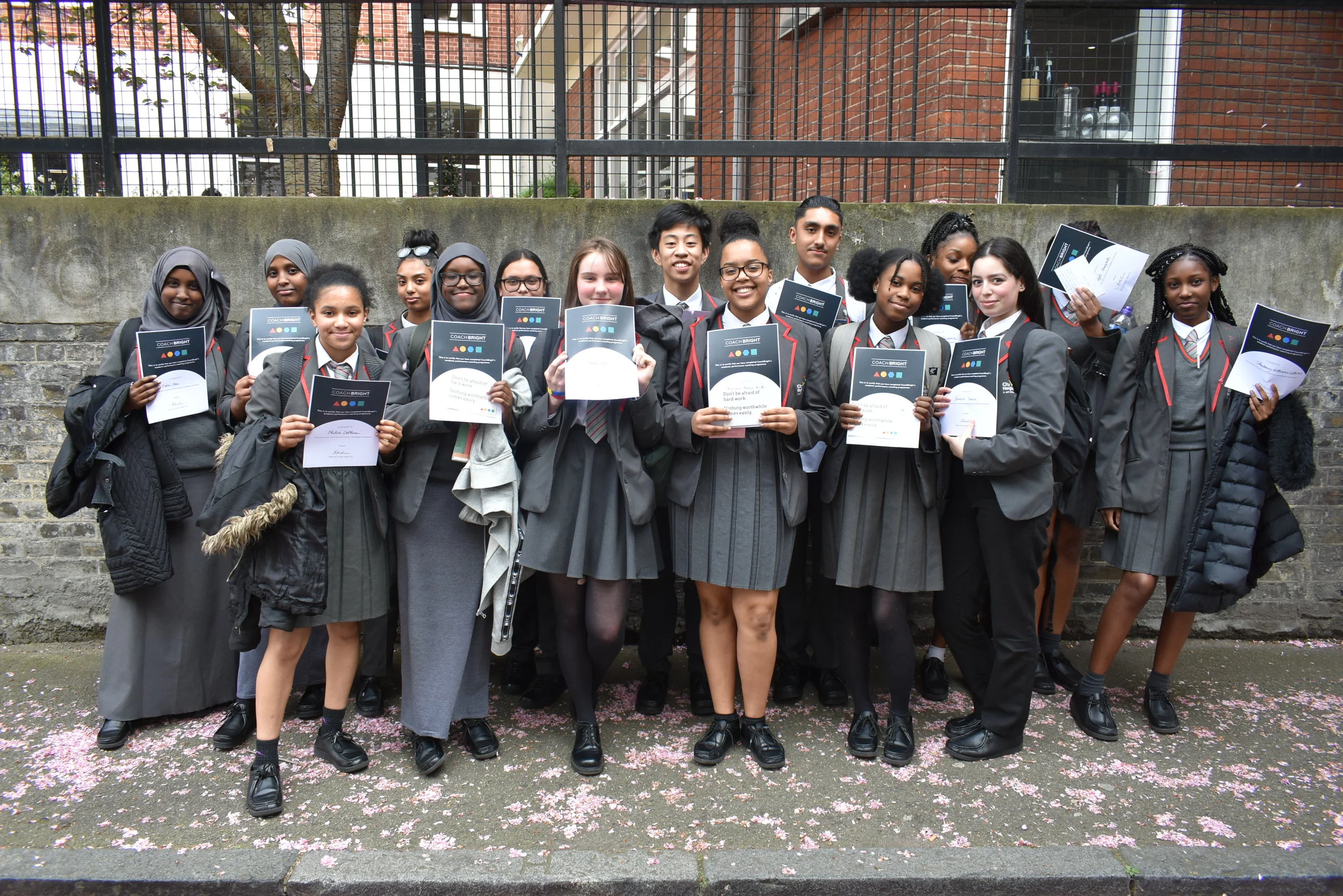
Class of 2017 - let's go! 94% of our coachees who left Year 13 are going on to university in a few weeks time. See where here.

Go team - our alumni coachees are beginning the next journey in their academic careers. We are super proud and can't wait to hear how everyone gets on.
Well done and keep on raising the bar. For Class of 2017:
- 94% are going to university
- 70% are going to a top third most selective university (based on DFE definition). For reference, national picture looks like 63% of independent school pupils and 29% of state school pupils to top third universities.
- 57% are going to a top 30 university (based on Complete University Guide)
- 40% are going to a Russell Group university
- 6% are going onto high level apprenticeships or taking a gap year
Universities, we're coming for you. Our coachees are heading across the nation to:
- Cambridge
- Manchester
- Sheffield
- Birmingham
- Leeds
- Nottingham
- Queen Mary
- Southampton
- UCL
- Kings College London
- Loughborough
- Royal Veterinary College
- St George's
- Lancaster
- Leicester
- Goldsmiths
- City and Guilds London Art School
- Kent
- Brunel
- Birkbeck
- Bournemouth
- Bath Spa
- Aston
- Kingston
- Kent
- Essex
- London Metropolitan
- Westminster
New term, Growing team
Meet our two new Programme Officers based in London and Exeter. Yasmin and William have joined our team to drive our programmes forward and grow our impact.

Meet Yasmin and William, our two new Programme Officers...

Yasmin Nasli (London)
Yasmin has recently returned to her home city of London after graduating from Exeter University, where she studied English with a bit of politics. After also spending some time living abroad during her degree, one of Yasmin’s main passions is travel, but when at home she can usually be found reading a good book or getting involved in a political discussion.
Yasmin first got involved with CoachBright whilst at university, as a coach at one of our partner schools in Exeter. As the first in her family to go to university, Yasmin is now looking forward to working full-time with us to support our mission to tackle educational disadvantage!

William Mitchell (Exeter)
William has recently moved down South from cold and rainy Edinburgh, to what now seems like tropical Exeter. After studying Drama and Performance at Queen Margaret University, William has spent time working in both international development and in start-ups, while also living in a few corners of the world.
William’s main passion is travel, particularly to unusual destinations but he also enjoys anything outdoors and swimming with sharks (okay, the last one is not true - he just wanted to sound more exciting). Being the first in his family to go to university, William is excited to join CoachBright in Exeter and play his part in making education fairer!
Be That Person
Our Blog Editor Aliya talks about her time volunteering in her home country of Malaysia and what the experience taught her about the goals and mission of CoachBright. Interested? Read more below!

With some of the kids I taught (Picture credits : The Kalsom Movement)
By Aliya Nabil, Blog Editor
Aliya talks about her time volunteering with students in Malaysia and what the experience taught her about CoachBright's mission!
This summer, I decided to take a week off my internship. This is how the week went.
On Monday, I returned to my former school for an afternoon with some ex-schoolmates. We gave a talk to the students about their options after leaving school. Despite this talk being a first in terms of informing the students of what the pathways after school look like, I was reminded about how immensely privileged the students at my school (including myself) were. We had well-equipped classrooms, meals provided and we didn’t have to worry much about the cost of textbooks or uniforms. We weren’t necessarily aware of the struggles that some have to face to gain a good education.
The next day, after some last-minute packing, I was all set to go to another part of Malaysia (Kedah), further north and much less urban than what I am used to. I was part of a student-led organisation called The Kalsom Movement in Malaysia that has been championing the eradication of educational inequality since 1996. Not entirely sure what to expect, I boarded the bus with a group of other passionate university students and we set off to Kedah.
We were to spend three days in a local primary school, helping to increase the students’ confidence in learning English. Through a series of engaging modules the facilitators (us university students) had prepared, the students became more and more confident to answer questions and try their hand at speaking English. This is not to say the change was necessarily exponential, but seeing the children grow at their own pace was so satisfying. Every time a student used the word you had taught them in a sentence, or tried to say something new in English, was a proud little moment for us facilitators. Throughout the three days we got to know the students more closely. I realised how different some of their lives were compared to my own. They weren’t complaining but I knew they deserved more.
The most heart-warming thing for me was the students’ willingness to communicate with us after the programme. I thought about what might be fuelling this enthusiasm and realised that the facilitators may be the only people they could comfortably converse in English with, or at least, have a reason to.
After the 3 days, I took a flight to join another group of motivated people in the land of Sabah, off peninsular Malaysia, a place I had never been to. This time for a short 2-day programme to teach English to Year 6 students who would be taking a major national examination soon. The programme was organised primarily by a woman from the very same village the programme was held. Currently a consultant paediatrician in a London hospital, I admired her spirit to give back to her own community.
Growing up in a rural area didn’t mean that these students had a lack of ambition. In fact, the students I met were full of potential and had a strong willingness to learn. I recall a student mentioning that he’d like to go to Harvard to do Physics! I was involved in mentoring a group of students for a public speaking competition. Seeing them take note of my advice and speaking in front of a large crowd made me especially proud!
The week ended faster than I expected. In a rush to return to my laboratory internship, I took a *very* early morning flight and dragged myself into the research institute the same morning. I arrived at the laboratory, perhaps a bit shocked by the sharp contrast between my current surrounding and that which I experienced the week before. The air conditioning was cold and harsh, like the environment – silent, sterile, and objective. The loudest of sounds was the subtle whirring of the AC system. It was back to work, staring into my laptop and accurately measuring potentially dangerous liquids. I missed the warmth of being surrounded by inquisitive schoolchildren. Funnily enough, I missed putting in tons of energy into my day (as opposed to fiddling around with delicate laboratory equipment) and seeing results in front of my eyes (as opposed to technical errors).
Looking back, I realise that for that short period of time, perhaps us volunteers were the only people these children could speak English to, or ask about university, or what it was like living in a different country. Some of the questions may seem simple or unimportant but answering them is important!
Being a volunteer is about being that person. Being that dependable face for these children because they might not have any other people they know to expose them to the outside world. Being that person who can show them that it is possible no matter where you’re from, to access high quality tertiary education. That your family background should not determine your destiny, and that there are pathways to success for all.
Obviously, educational inequality is still relevant and there are many issues that need to be solved to completely eradicate this problem. But being part of organisations such as CoachBright can make change faster. There are so many of us out there who are studying at top universities or are working professionals. If every child had someone there to help them figure out their dreams and show them that they can realistically achieve them, we’d be one step forward in levelling the playing field. Do not underestimate the power of a person having confidence in you. You can be that person for these children! You are not their hero or saviour, but simply showing them that they have it in them to succeed. As a coach at CoachBright, you are that person.
The Value of Volunteering
London coach, Matthew Ansell , tells us how volunteering at CoachBright has been for him. Read more below!

Matthew Ansell is a 2nd year Arts and Sciences student at UCL. Here, he shares his experience volunteering with CoachBright.
What do you do as a volunteer?
As a volunteer with CoachBright I am assigned to work with a student, from a state school in the London area, for one term. My time coaching each student begins with a discussion of what they’re seeking to get out of the experience. This is driven by a focus on getting a place at a top university, but the actual focus of the program can take on many forms. For instance, in one session I helped a student to improve in mathematics while in another we worked on economics.
While these objectives provide the underlying structure for the program every session is different, as you have to respond to the needs of your coachee. This has seen me go beyond just academic help to assist with applications for universities and other programs.
How did you find out about this volunteering?
I found out about CoachBright on the Freshers’ Facebook page.
What were your first impressions when you started volunteering?
As with any new experience, before I started coaching I was somewhat uncertain as to how I would perform as a coach. Having only had limited experience tutoring in the past, which was with primary school students, working with students at such an important moment in their education was intimidating.
However, thanks in part to the enthusiasm of my coachee, I quickly realised how much we could both get from the experience. Most of all I was struck by how much one on one work was able to help students clarify their objectives and progress academically. This realisation made my first experiences, and those that followed, exceedingly exciting.
How do you feel about it now?
After a year of coaching I still just as convinced of the value of the experience. Seeing the students that my fellow coaches and I encountered progress so rapidly was incredibly encouraging. Moreover, the experience has led me to realise the importance of CoachBright’s efforts to address educational inequality. This has affirmed my interest in continuing to work with the organisation in the future.
What’s the best thing about volunteering?
Taking on the responsibility of helping a student to progress at as important a stage in their academic lives as the A levels is undoubtedly a slightly intimidating prospect. However, while challenging this sense is what made the commitment and progress of the students that I worked with so rewarding. Thus, in my case I found that the best thing about volunteering was the sense of achievement you get from helping someone to succeed and maximise their potential.
And what’s the most challenging thing?
While rewarding, volunteering doesn’t come without its challenges. In my case I found that the most challenging aspect of the program was balancing keeping my coachee engaged while also meeting the objectives that we had set. This balance was crucial to the success of the program and while difficult to maintain it was extremely rewarding when I did.
How has volunteering changed you?
When I started working with CoachBright I had very little experience of coaching or tutoring in general. Thus, the program helped to teach me many of the skills necessary to succeed in those roles, such as patience, and forced me to become much more responsive when my initial plans didn’t work out. Just as importantly, coaching has exposed me to a problem that I previously didn’t know much about, educational inequality. This exposure to different issues has been one of the most valuable aspects of the experience.
What difference do you feel you’ve made by volunteering?
As with most experiences volunteering doesn’t come without a degree of self-doubt, as to whether you are achieving what you set out to. However, after a year of working with CoachBright, and seeing the progress of the students I met, I am confident that our team has made a difference.
An important factor in me reaching this conclusion has been the one on one work with particular students that the program relies upon. This interaction, over the course of an entire term, has allowed me to witness the full impact of the program on my coachee. In this regard it has shown me the difference that my peers and I have made in helping our students to progress academically. Additionally believe that working with CoachBright has provided the students, whom I encountered, with a new source of information about applying to university and what life is like once they get there. In my opinion this is perhaps the most valuable contribution that we have made in that it provides an insight that many students hadn’t been able to get access to previously.
Has volunteering given you any new perspectives on your academic studies at UCL?
Working on an issue like educational inequality, which is so relevant to an institution like UCL, has had a profound influence on my perspectives on my studies. Most of all it has given me a new appreciation for the commitment that so many lecturers show and the great education that we receive. Moreover, coaching students who are so determined to succeed has reaffirmed my own commitment to making the most out of my education and the resources that UCL provides.
Would you recommend the project to anyone else? If so, why?
I would recommend working with CoachBright, as well as volunteering in general, to any UCL student. The experience is challenging but it is these challenges that make your efforts, and hopefully successes, so rewarding. Moreover, volunteering provides an opportunity to interact with people and to hear viewpoints that you might not otherwise encounter, which is something that I think we can all appreciate the value of.
This article was originally posted on UCL Union's Volunteering Services Unit blog.
Coachee Catch-Up with Jemmar!
Ex-coachee Jemmar talks university, being independent and having a coach with the same ideals. Read below to find out more!

We're already in our third edition of Coachee Catch-Up! Here we interview Jemmar - a passionate ex-coachee ready to make a difference in the world!
Can you tell us a little about yourself?
I’m Jemmar. I’m 20 years old and I’m a student at Brunel University London studying Politics and Sociology. I’m an activist and black feminist. I hold a variety of positions in a handful of organisations - I'm a GirlGuiding Delegate, Black Cultural Archives Youth Forum member and newly elected African Caribbean Society Liaison Officer.
How has university life been for you so far?
I’m writing this after completing my first year of university. I would say it was challenging, awesome and worth it. I’d be lying if I said that I didn’t consider dropping out. Early mornings, late nights, lots of reading and meeting deadlines - a challenge indeed. I made a lot of friends, dropped about half of them, learned a lot (as one is supposed to at university), developed some new views and reaffirmed others.
If you could give a heads-up to prospective university students out there, what would your advice be?
Advice I would give to prospective university students is during the summer, try your best to develop as much independence as possible. If you don’t know how to already, learn to cook, clean and so on. Make sure everything university related is sorted; all the forms are completed, everything they asked for is sent off, they have all your contact details and student finance is completed.
TALK TO YOUR LECTURERS! I hate research methods and I personally saw politics as my weaker side, yet my best module grades are in my politics research method module. This was simply because I was constantly speaking to my lecturers (this was also due to the fact that I caught a virus which threw off me completing assignments and attending essential lectures so I had to!).
How did you find the transition from school to university?
The transition from school to university was bittersweet. I was going to study topics that I loved but at the same time, I had no one to push me and be on me to make sure I was making the most of my university and its resources. I also think learning to be self-reliant was key. If I didn’t like a lecturer, I had to talk to someone. If I wasn’t feeling well, I had to take my own initiative and eat some fruit or drink some water, and if it got serious I would go and see the GP. If you think you need to talk about your mental health, seek help through counselling. Don’t understand something? Read around the topic and talk to your tutor. I had to learn to make the effort for myself, by myself.
You were on the Advocacy Academy and had coaching, how did you find it?
The Advocacy Academy was an amazing experience, it really cemented in me my love for politics and fighting for social justice. Without it I would have probably ended up studying Psychology and then dropping out of university because I didn’t like it. Having a coach via CoachBright was ridiculously fun. My coach was a feminist like me and being paired with someone who shares similar opinions helped to shape what I’d like to do and be involved in during and after university.
Is there any particular coaching that still resonates within you?
One thing that really resonated with me was that my coach would email and check up on me. Having someone requiring updates and showing interest made me happy and want to achieve my goals even more. Another thing was the way I could tell my coach a dilemma and we’d make a plan to sort it out together. I am quick to panic so I really enjoyed that.
Lastly, do you have any plans for the future?
I have a ridiculous number of plans for the future. I will continue to write, to create, to film. I could go on and on. Definitely finish university with a 1st and possibly do a postgraduate degree in Political Sociology. Potentially work in Parliament, maybe the Civil Service or charity fundraising. I really want to work to develop the Caribbean and West Africa.
Are you one of our ex-coachees? We'd love to catch-up with you! If you're interested in being interviewed, drop us an email at team@coachbright.org.
“Learning is not about getting everything right or checking things off a list, it is about nurturing an attitude of perseverance and resilience.”